
DECIDE Data Platform: connecting circular business model data for better analysis and monitoring
Circular Economy Business Models can only be compared, monitored and transferred successfully if the data behind them is structured and connected. This is especially important when business models are described through different tools, formats and perspectives.
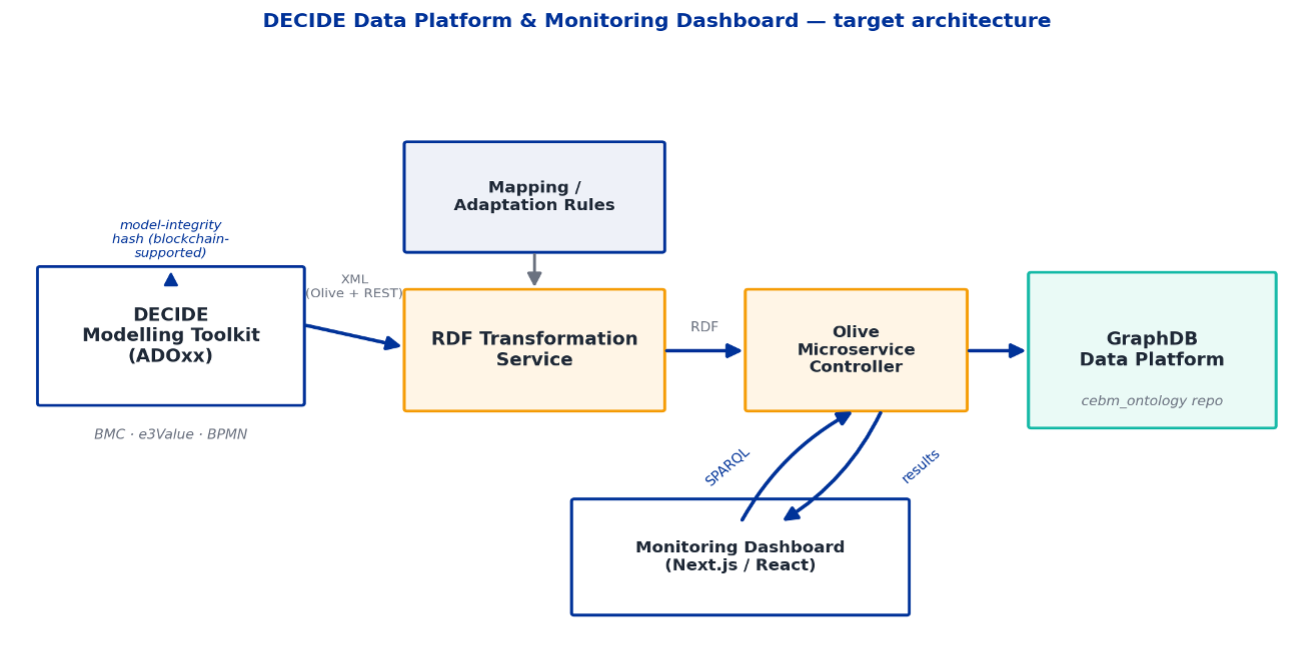
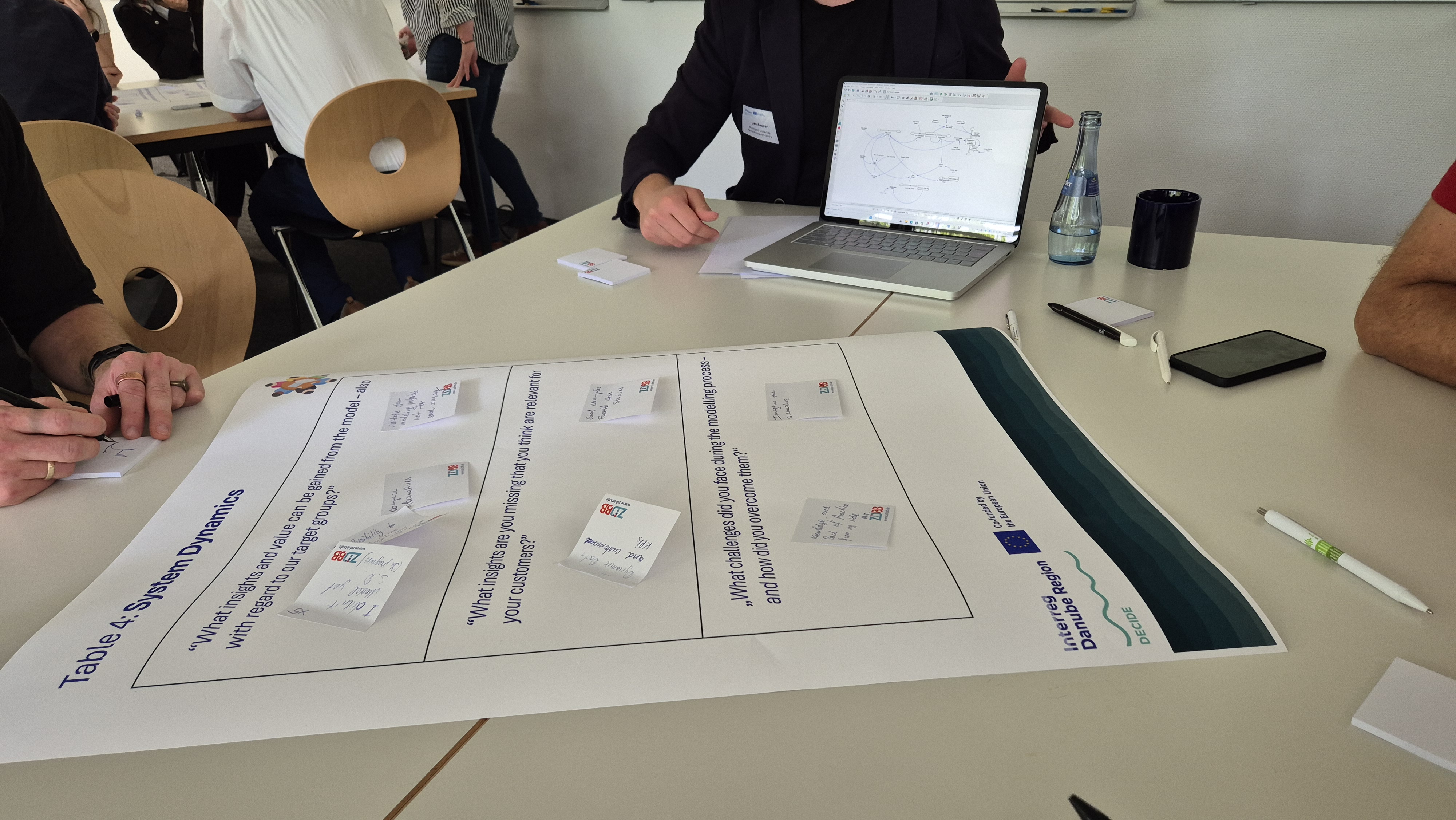
DECIDE Data Platform & Monitoring Dashboard. Copyright: Miha Škrokov (Anteja ECG), Jan Fauser ( Reutlingen University)
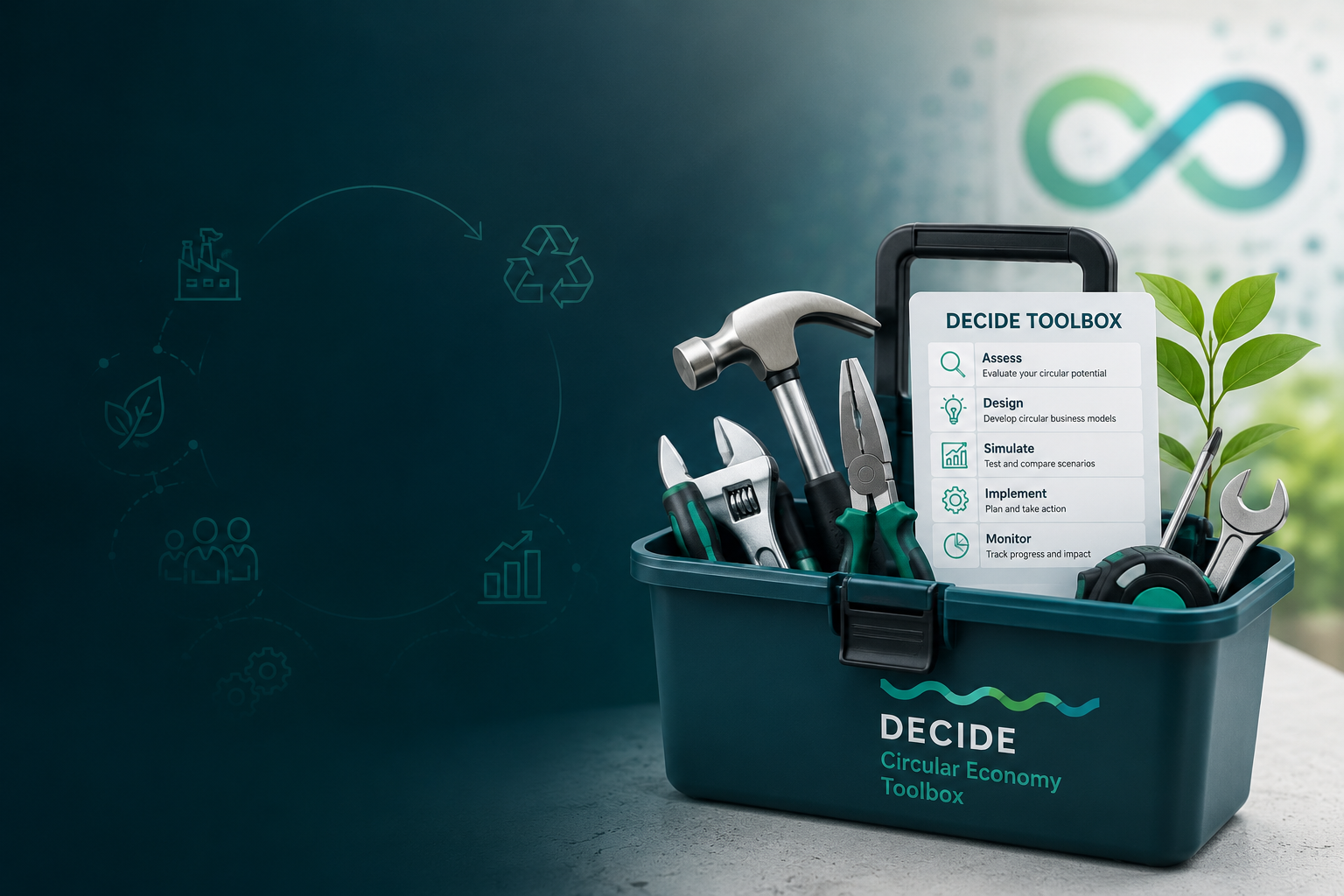
To support this need, the DECIDE project has finalised Deliverable D1.2.6 – High-Quality Circular Economy Value Data Platform, which provides the data and integration layer of the DECIDE Toolbox.
Its main role is to connect different circular economy business model tools and make their outputs available in a structured, comparable and usable way.
Circular Economy Business Models often include several actors, resources, processes and value exchanges. They can be described from different perspectives, for example, through a Business Model Canvas, value network models or process models. However, when these models remain separate, it becomes difficult to compare them, monitor their performance or use them as a shared basis for decision-making.
The High-Quality Circular Economy Value Data Platform was developed to address this challenge. It transforms circular economy business models created with the DECIDE Modelling Toolkit into linked data and stores them in a shared semantic structure. In practice, this means that information from different modelling tools can be connected, queried and prepared for further analysis.
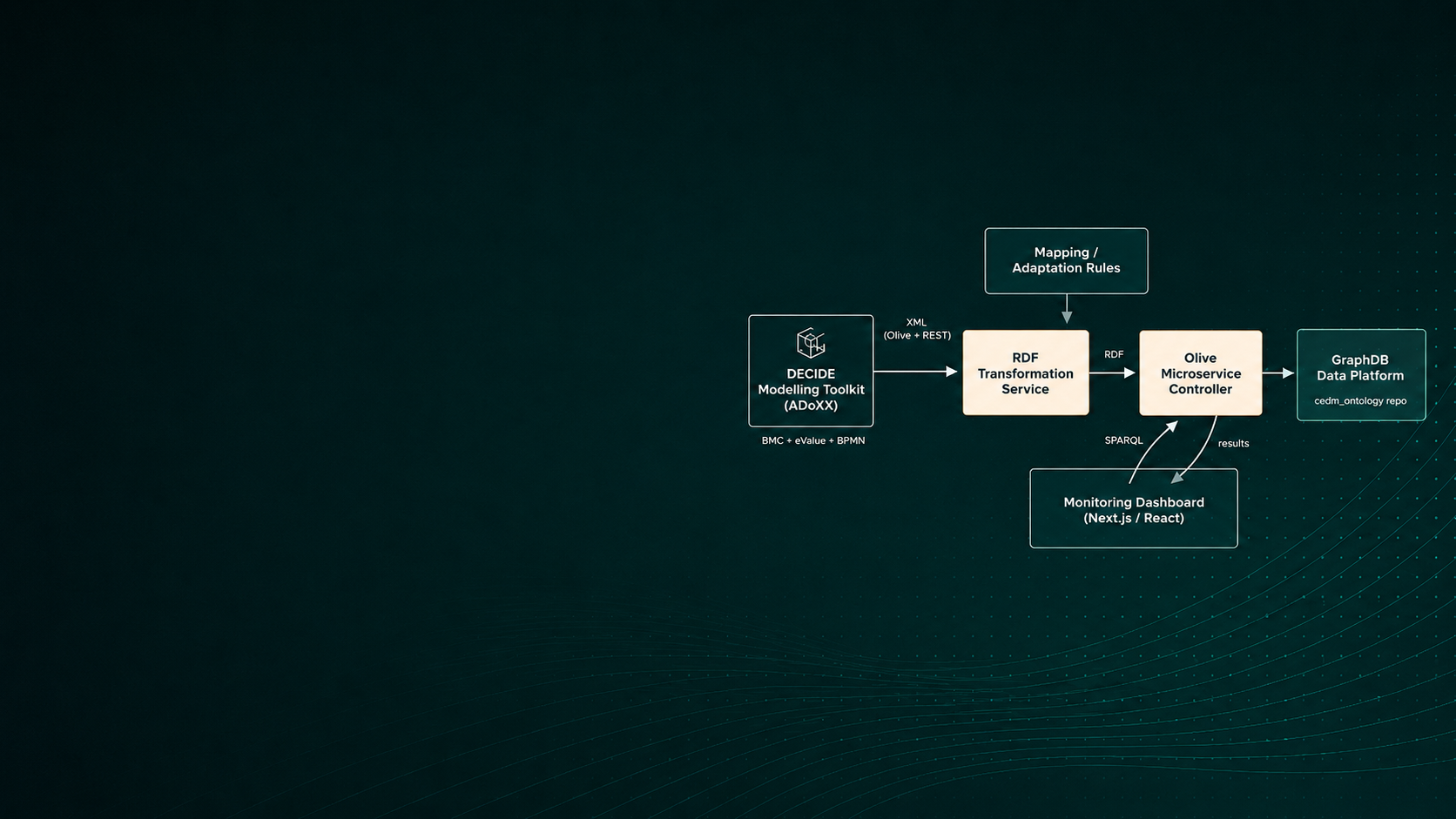
The platform works as a central knowledge base for circular economy business model data. Models created through DECIDE tools, including Business Model Canvas, e3Value and BPMN, are transformed into RDF, adapted to a shared Circular Economy Business Model ontology and stored in a GraphDB triplestore. The data can then be accessed through SPARQL and used by other DECIDE components, including the Monitoring Dashboard.
Although these technical terms may sound complex, their purpose is practical. RDF helps connect information from different sources. The ontology provides a shared vocabulary for describing business models, actors, value exchanges, processes and indicators. The triplestore stores this connected information, while SPARQL enables the dashboard and other tools to retrieve the data they need.
This is particularly important for circular economy work, where solutions often depend on cooperation between multiple organisations. SMEs, regional development agencies, business support organisations, cluster managers and policymakers need reliable and structured information to understand how circular business models work, which actors are involved and what impacts they may generate.
The platform also supports the Monitoring Dashboard developed under Deliverable D1.2.5. While the dashboard provides a user-friendly visualisation of circular business model performance, the Data Platform provides the underlying data foundation. It enables the dashboard to retrieve relevant information and present indicators across the three Triple Bottom Line dimensions: economic, environmental and social.
The finalised deliverable includes several key components: a shared Circular Economy Business Model ontology, an RDF transformation and mapping pipeline, a GraphDB triplestore, the Olive Microservice Controller, a production ingestion API and the KPI framework used by the Monitoring Dashboard. The platform has been implemented and deployed on a secure cloud infrastructure.
A key added value of the Data Platform is that it turns circular business model analysis from a fragmented and document-based process into a more integrated and data-driven one. Business models described through different tools can be connected through one shared structure, making it easier to compare cases, aggregate information and reuse knowledge from validated circular economy examples.
This directly supports the wider objective of the DECIDE project: helping stakeholders in the Danube Region identify, develop, implement and transfer successful Circular Economy Business Models. DECIDE focuses on five sectors with strong circular economy potential: food, packaging, textiles, batteries and smart cities.
For SMEs, the platform can support a clearer understanding of how circular business model data can be structured, monitored and further used. For business support organisations and regional development agencies, it offers a basis for comparing circular solutions and supporting companies with more evidence-based advice. For policymakers and sectoral agencies, it can contribute to better insight into circular economy value chains and the conditions needed for their transfer and scaling.
The Data Platform was developed by PP7 Anteja ECG, with contributions from PP2 HSRT and PP1 ZD.BB. It builds on open semantic web standards such as RDF and SPARQL, as well as containerised services that can be redeployed and further developed beyond the project.
This also supports replicability. The platform is not limited to one region or one sector. Its ontology and mapping rules can be extended to additional industries, and new indicators can be added through the KPI extension mechanism. This means that the approach can also be adapted to other geographical and sectoral contexts where circular economy business models need to be stored, compared and monitored.
By finalising Deliverable D1.2.6, DECIDE has strengthened the digital foundation of its circular economy tools. The Data Platform provides the semantic and technical infrastructure needed to transform model data into useful knowledge and to support the monitoring, comparison and further development of circular business models.
In this way, the deliverable This technical foundation is further complemented by the closely related work completed under Deliverables D2.2.1 and D2.2.2, which strengthen the way circular business model knowledge is organised, accessed and quality-assured within the DECIDE Toolbox. The HQCEVC Data Platform and its Data Quality Gateway bring together different approaches to describing and analysing circular business models and connect them with reliable datasets, while applying defined quality requirements to the information made available to users. Together with the semantic and integration infrastructure developed under D1.2.6, these results create a stronger and more trustworthy knowledge base for comparing circular business models and identifying opportunities for their practical application.
For SMEs, regional developers and other DECIDE users, this means easier access to consistent information that can support value-chain analysis, evidence-based decision-making and the transfer of successful circular solutions. to the long-term usability of DECIDE project results and to the wider uptake of sustainable, resource-efficient business models across the Danube Region.
This article has been developed within the framework of the project Digital Services for Circular Economy - A Toolbox for Regional Developers & SMEs (DECIDE), co-financed by the Interreg Danube Region Programme under the 2021-2027 financial period. The content reflects the views of the authors and does not necessarily represent the official position of the DECIDE project, its partners, or the programme authorities.

06/07/2026
By Lea Trojnar Mustak
Share on social media:


Smart

News & Events
Read the most recent updates and explore the upcoming events.


Would you like to receive project updates?
You're already part of our community!
Welcome to our newsletter community!
Subscribe to our newsletter