
Validating the DECIDE Toolbox: ensuring practical relevance for circular business model support
The DECIDE project has finalised Deliverable D1.2.9 – Validation Documentation, an important step in confirming the practical relevance and usability of the DECIDE Toolbox.
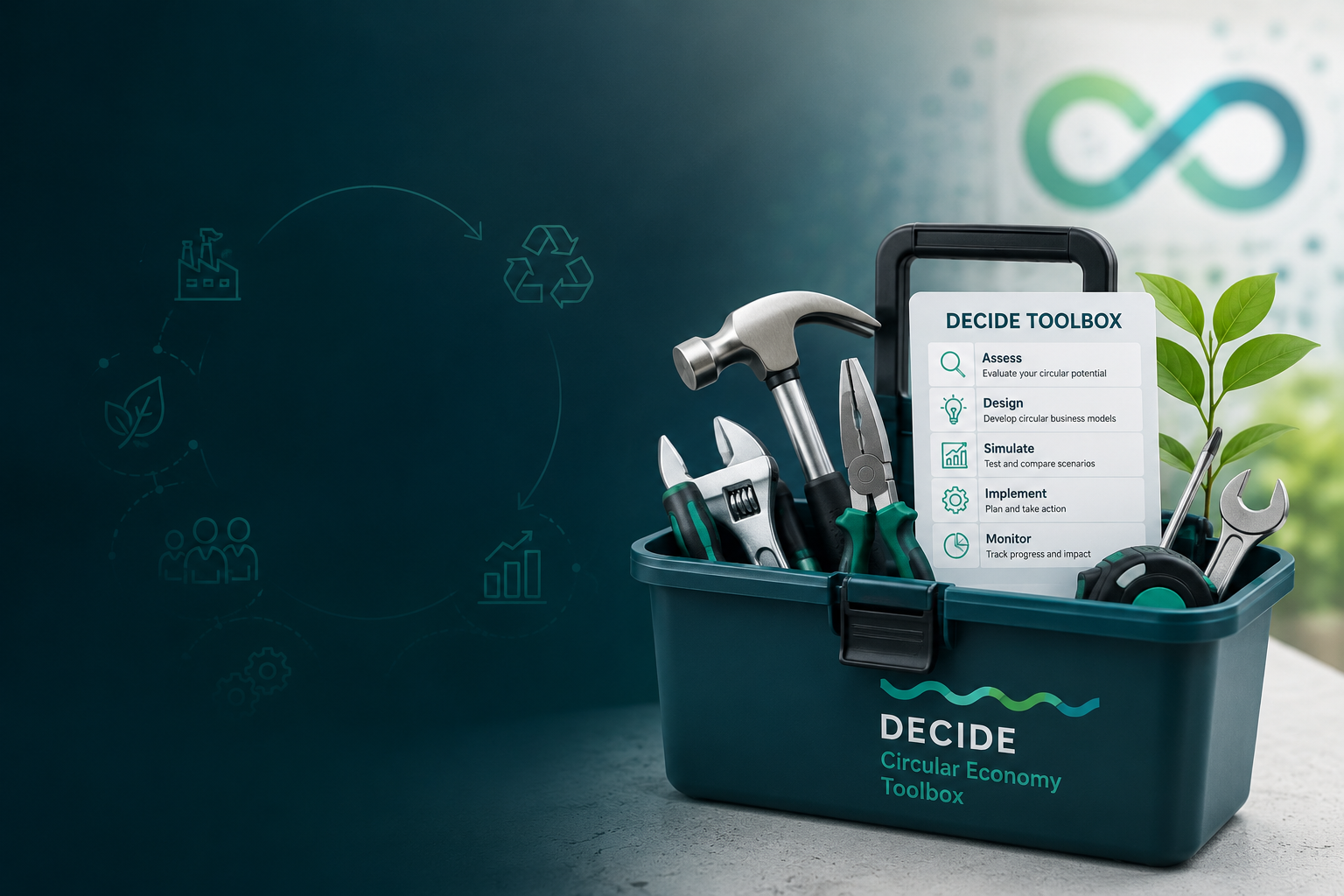
The DECIDE Toolbox was developed to support the identification, development, analysis, validation and implementation planning of Circular Economy Business Models. As a central result of the project, the Toolbox brings together several tools, methods, data components and learning materials that help stakeholders better understand how circular business models can be developed and applied in practice.
However, developing tools is only one part of the process. To make sure that they are useful for project partners and future users, they also need to be tested, discussed, improved and validated through practical activities. This is the purpose of Deliverable D1.2.9 – Validation Documentation.
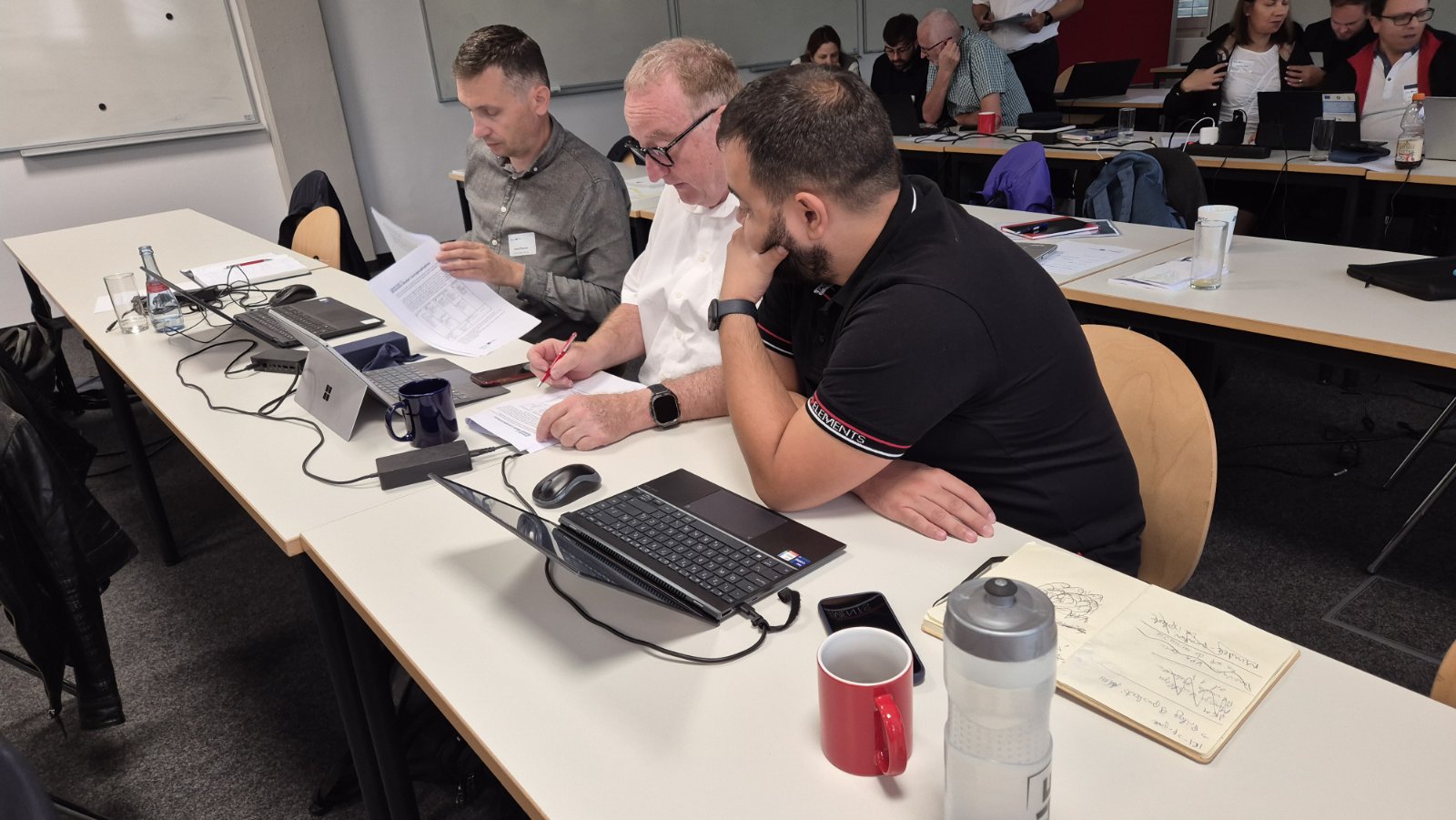
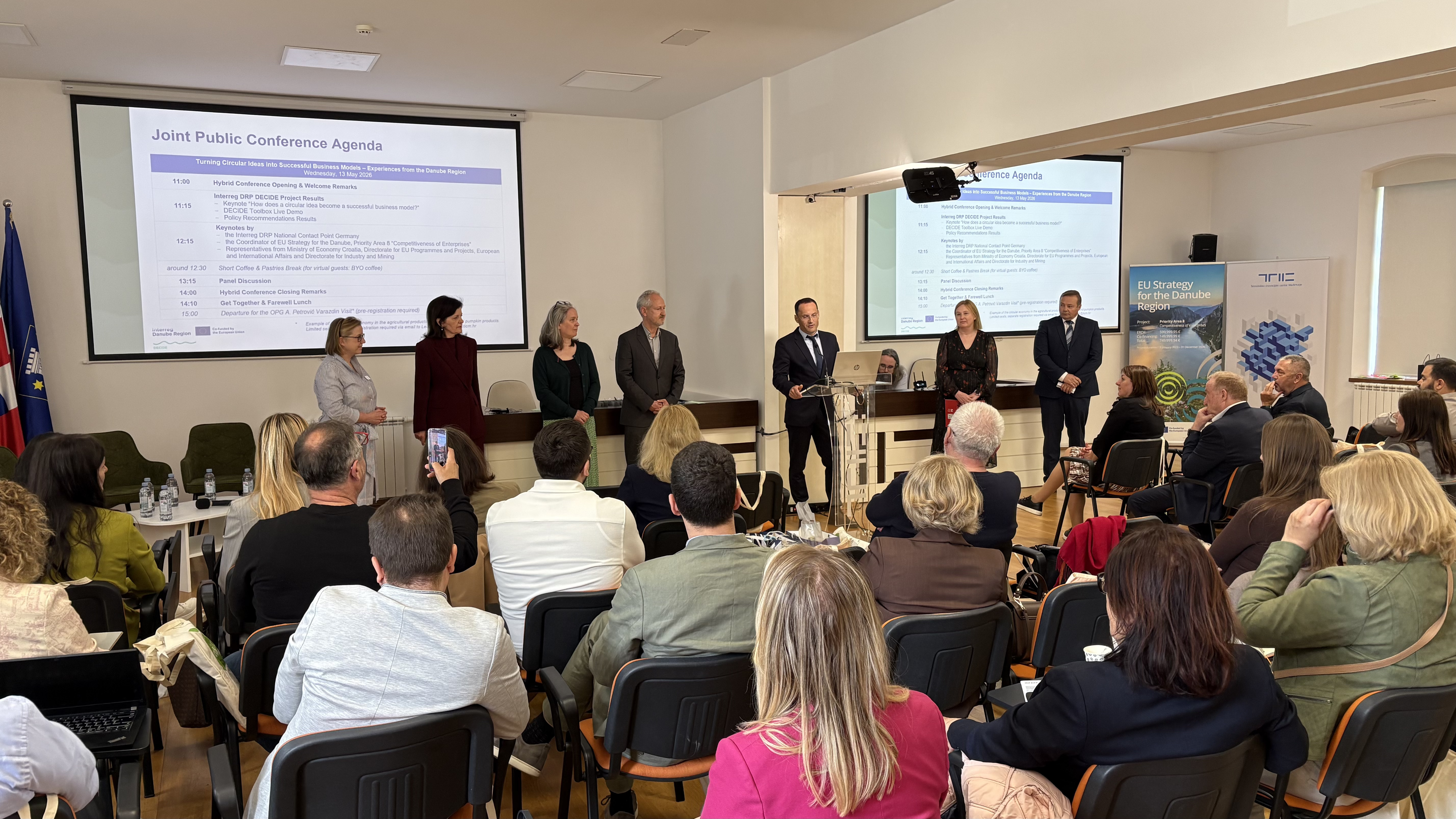
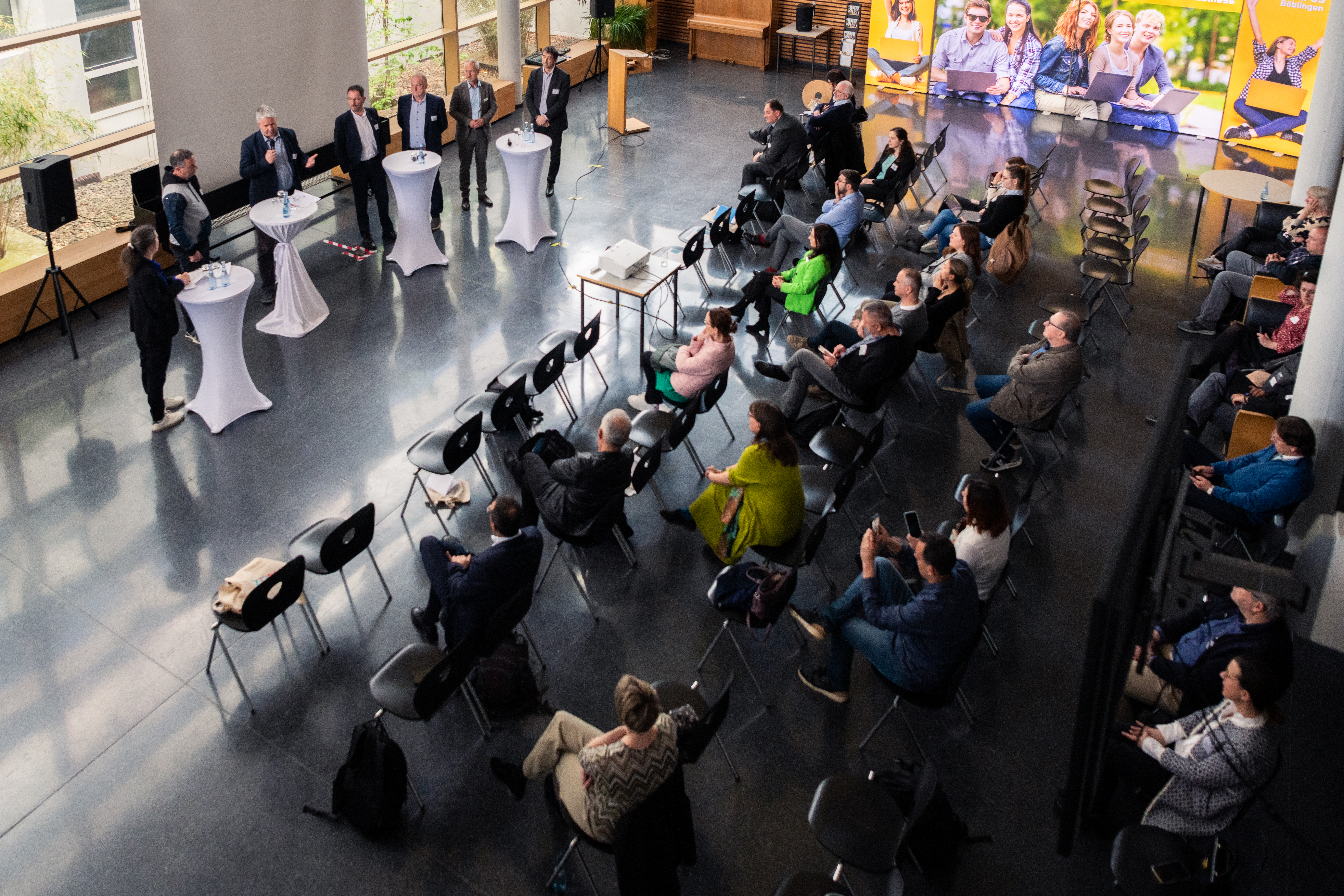
“Train the Trainer” workshop in Boblingen. Copyright: TICM
The deliverable documents how the DECIDE Toolbox and its components were validated during the project. Rather than treating validation as a single final testing activity, the project approached it as a continuous learning process. Feedback was collected throughout different project phases and used to improve the Toolbox, its supporting materials and its practical application.
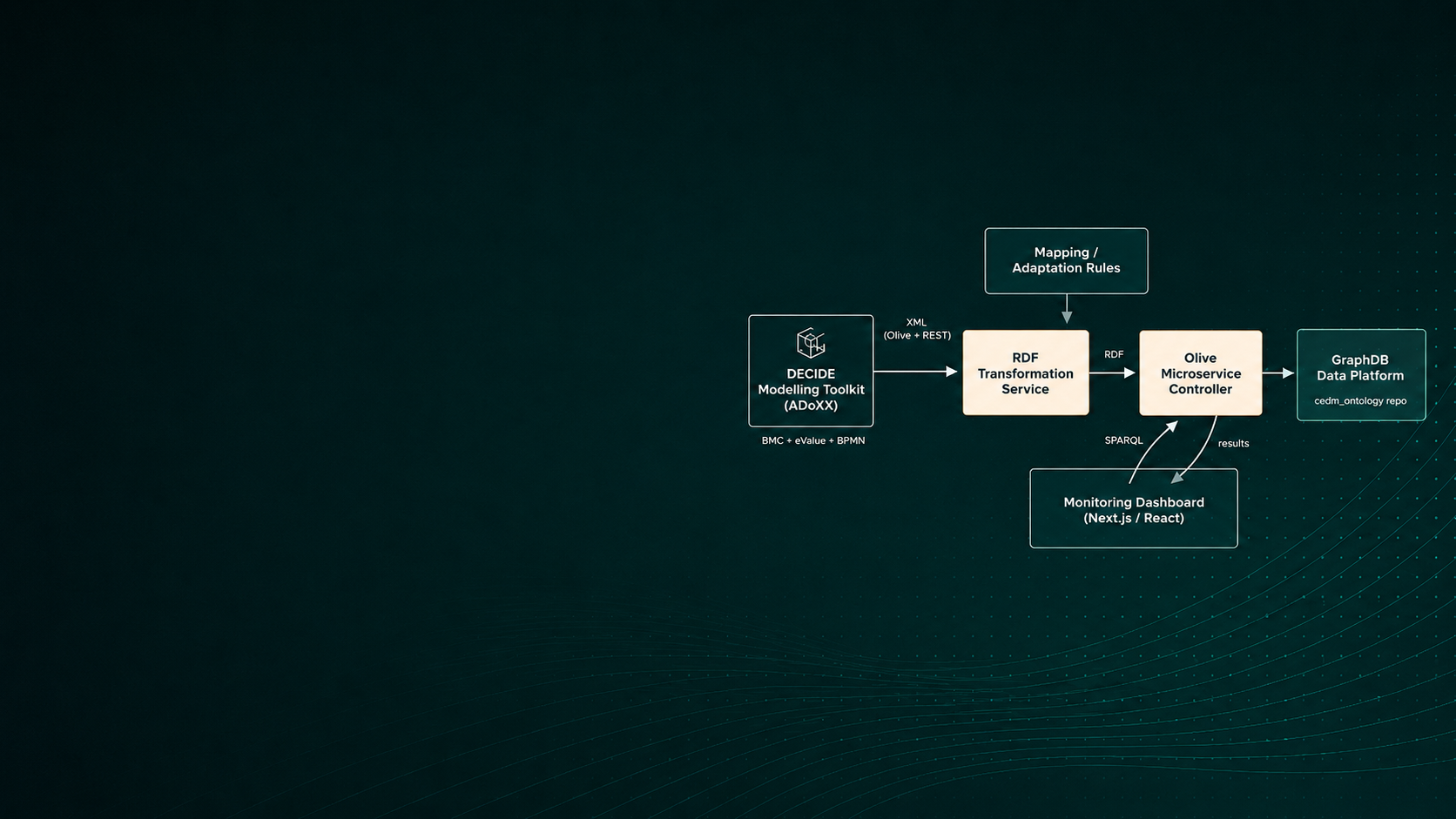
The validation covered all main components of the DECIDE Toolbox. These include the Circular Economy Business Modeller, which combines Business Model Canvas, BPMN and e3Value; the Circular Economy Value Chain Generator; the Digital Service Implementation Recommender; the Circular Economy Value Chain Simulator; the Monitoring Dashboard; the High-Quality Circular Economy Value Data Platform; the Service Catalogue; and the training and e-learning materials.
Several validation activities were carried out as part of this process. A standardised training case based on whey valorisation was used to demonstrate and test the use of different Toolbox components in a practical circular economy example. This helped partners better understand how different tools can work together when analysing and developing a circular business model.
Two Train-the-Trainer sessions were also organised, providing project partners with the opportunity to learn how to use the tools and methods and how to transfer this knowledge further to stakeholders. These sessions supported capacity building within the partnership and helped prepare partners for the future use of the Toolbox in workshops, trainings, pilot follow-ups and advisory activities.
“Train the Trainer” workshop in Boblingen. Copyright: TICM
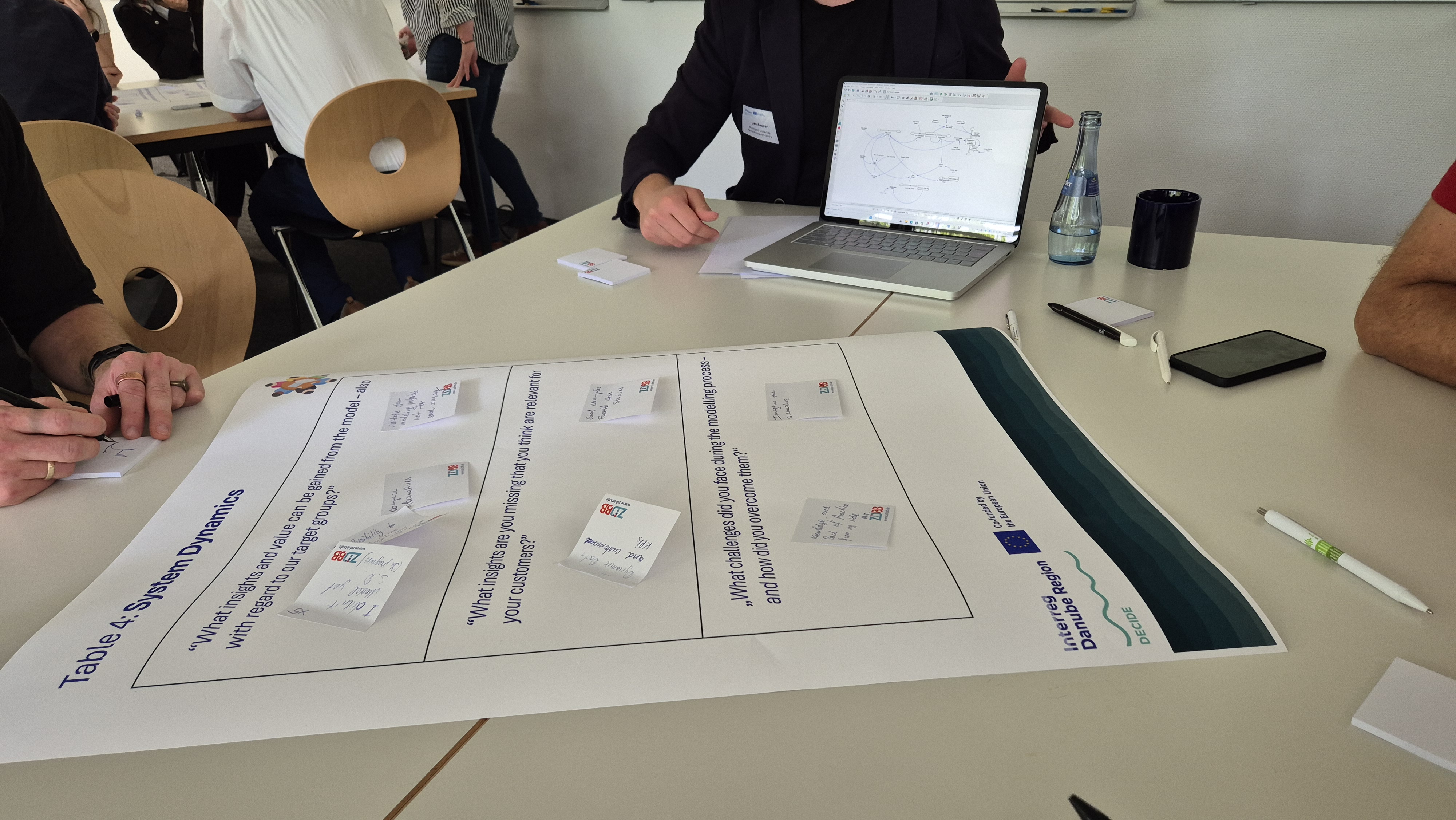
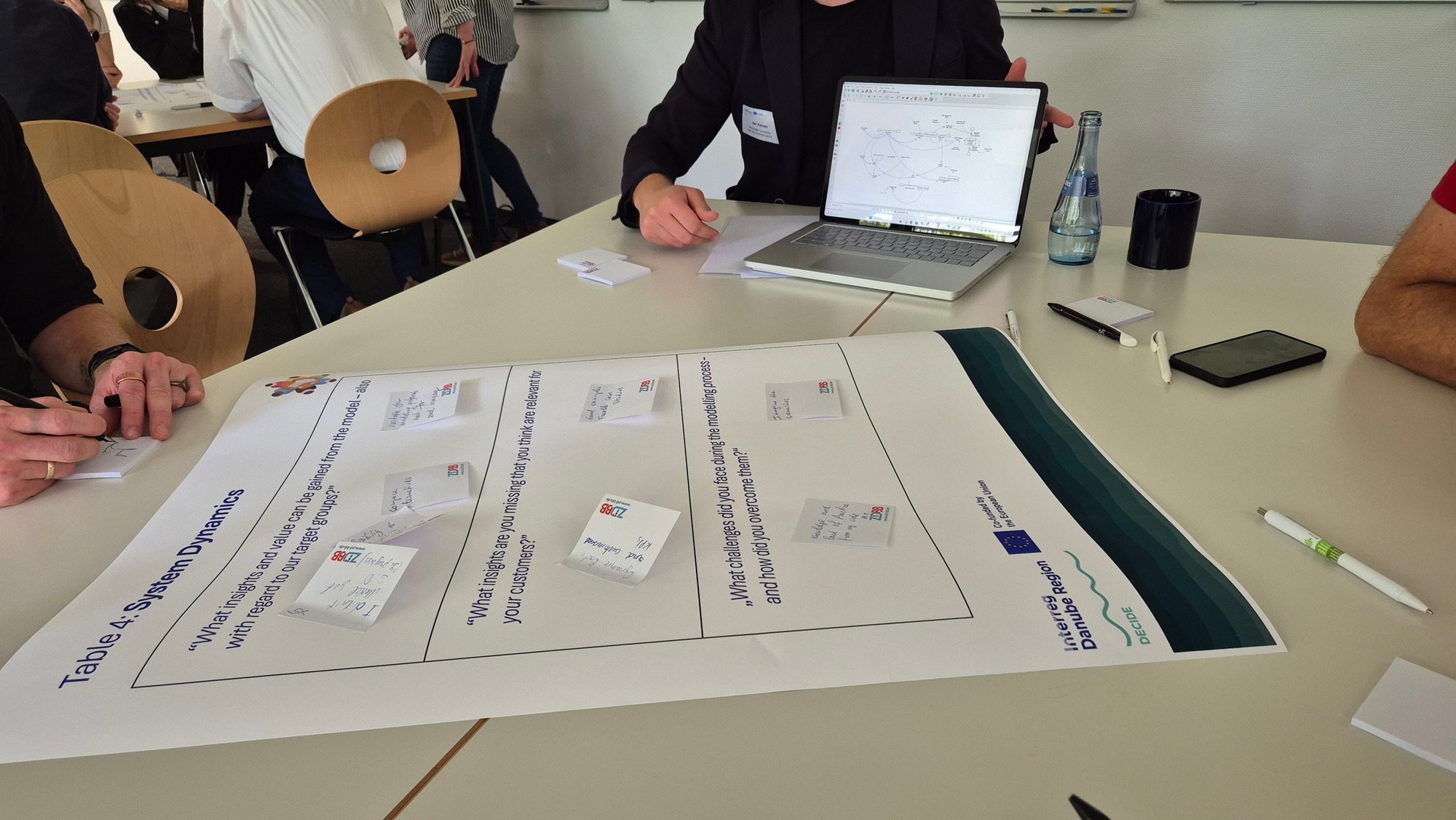
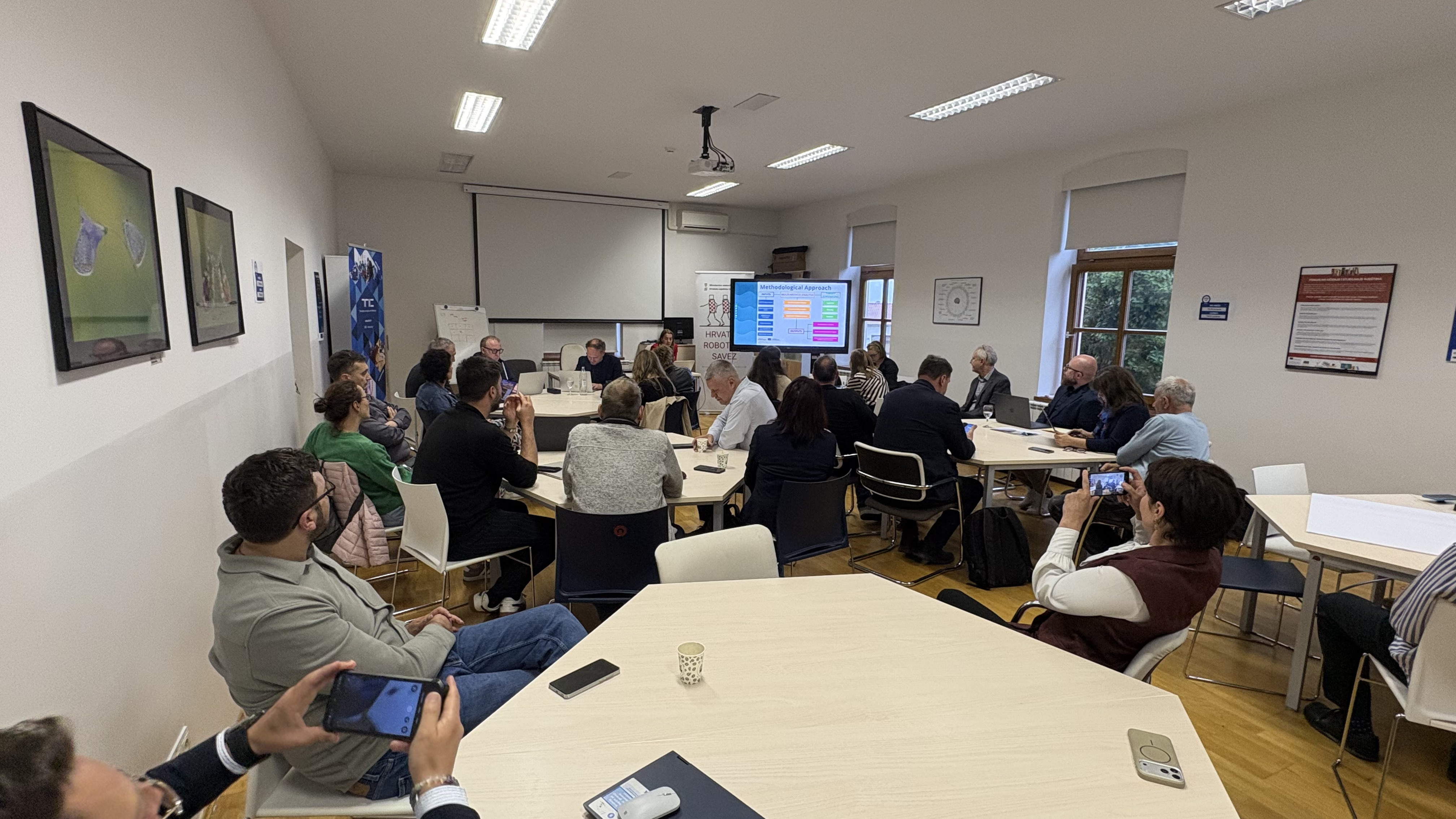
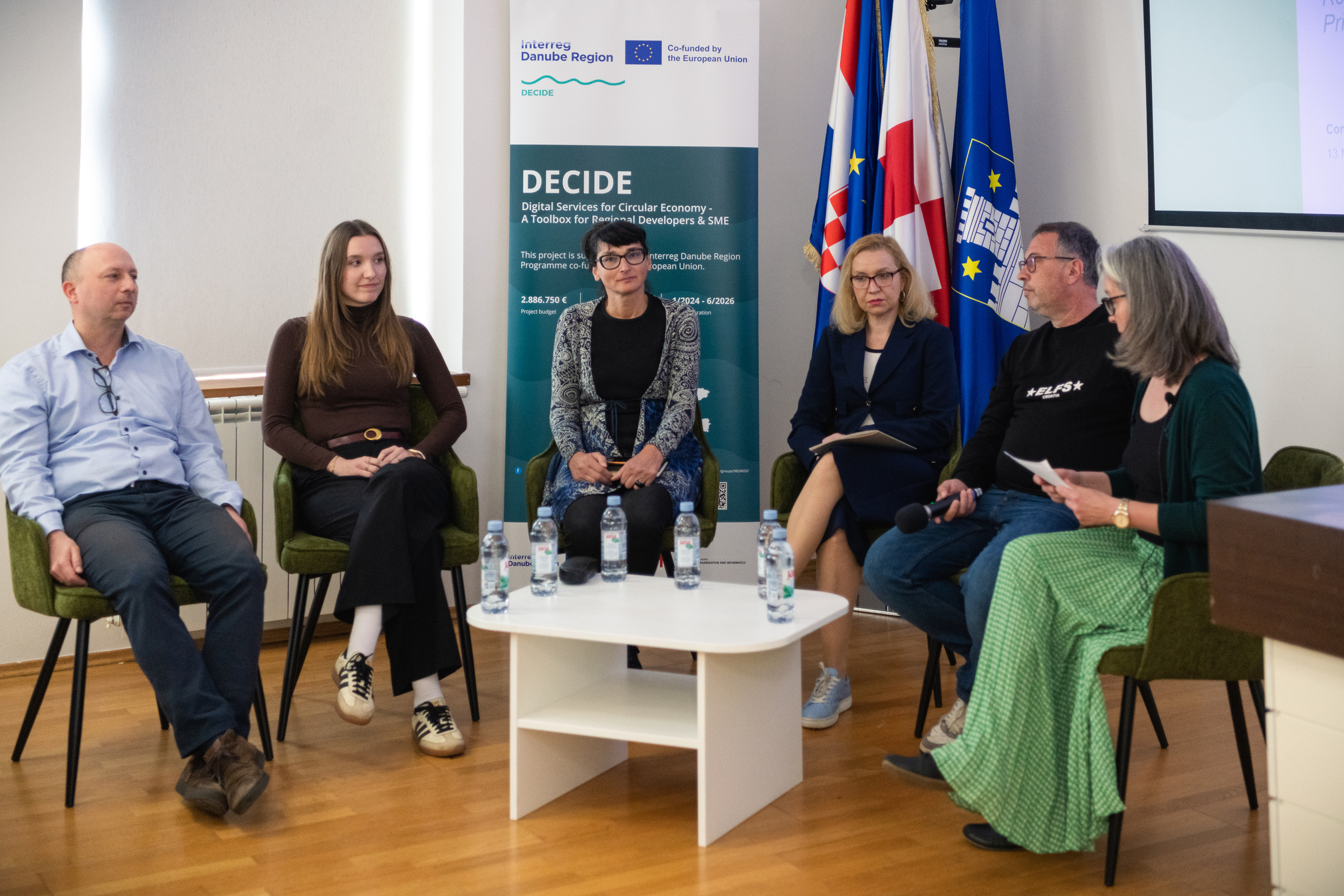
Another important validation activity was the World Café format, which enabled structured discussion and feedback across several thematic tables. Through this interactive approach, partners were able to reflect on the usability, clarity and practical applicability of different modelling methods and supporting tools, including Business Model Canvas, BPMN, e3Value and System Dynamics.
The validation process also included a partner survey, which contributed to the further development of learning materials, including the Moodle course and Digital Learning Content. This helped ensure that the training materials respond to the needs of users and support a clearer understanding of circular economy business model development.
A key part of the validation was the application of the DECIDE Toolbox in nine pilot cases across the Danube Region. Through these pilot-related activities, partners reflected on how the tools supported their cases, what insights were generated and where additional guidance or improvements were needed.
The feedback showed that the Toolbox can help users structure circular business models, clarify involved actors, analyse value exchanges, better understand processes and support environmental and operational assessments. In some cases, the tools also helped assess whether specific circular processes were feasible or potentially uneconomic, providing useful insights before further implementation steps are taken.
Dedicated tool-specific validation activities were also carried out for several Toolbox components. Including validation of the Digital Service Implementation Recommender capability catalogue, the CEBM Catalogue, the Value Chain Generator, the Monitoring Dashboard and the Data Platform. Both strengths and areas for further improvement in individual components were detected in this process.
For SMEs, startups and pilot owners, this means that the Toolbox can support the process of moving from an initial circular idea to a more structured and evidence-based business model. It can help users understand who needs to be involved, how value is created and exchanged, which processes and capabilities are needed, and what impacts or limitations should be considered.
For business support organisations, cluster managers, regional development agencies and other regional catalysts, the validated Toolbox can serve as a practical framework for advisory work, workshops, training activities and support programmes. It provides a structured way to work with companies and other stakeholders on circular economy opportunities.
For policymakers, public authorities and sectoral agencies, the validation results provide insight into how digital tools and structured methods can support circular economy transition in practice. They also show how circular business model support can be connected with training, pilot cases, data-based monitoring and long-term capacity building.
The deliverable also confirms the importance of cooperation between project partners. Since all partners contributed to the validation process in different ways, the resulting documentation reflects practical experience from across the Danube Region and different organisational contexts.
By finalising Deliverable D1.2.9, DECIDE has completed an important validation step for its Toolbox. The deliverable shows that the tools and methods developed within the project were not only designed conceptually, but also tested, discussed and improved through practical project activities.
This article has been developed within the framework of the project Digital Services for Circular Economy - A Toolbox for Regional Developers & SMEs (DECIDE), co-financed by the Interreg Danube Region Programme under the 2021-2027 financial period. The content reflects the views of the authors and does not necessarily represent the official position of the DECIDE project, its partners, or the programme authorities.

08/07/2026
By Lea Trojnar Mustak
Share on social media:


Smart

News & Events
Read the most recent updates and explore the upcoming events.


Would you like to receive project updates?
You're already part of our community!
Welcome to our newsletter community!
Subscribe to our newsletter