
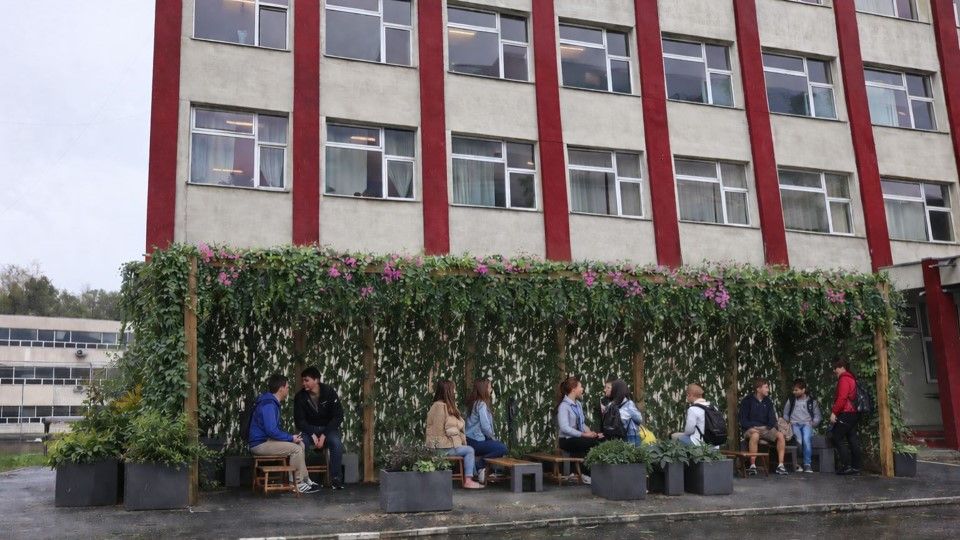

A Green Pergola Brings Urban Nature to a Bucharest School
Ivy, wisteria, wild vine, lavender, catmint, echinacea, heuchera and rosemary may seem like ordinary plants. In dense urban environments, however, they can become valuable neighbours that help reduce heat, support biodiversity and improve the quality of public spaces.
These benefits were at the heart of an agile pilot implemented by Zoomline SRL in Bucharest, Romania. The project explored how an affordable, modular and replicable green structure could help cities respond to rising temperatures while creating a healthier and more inspiring environment for local communities.
Greening a City with Limited Urban Nature
Heatwaves are becoming an increasingly serious challenge for cities. Dense construction, paved surfaces and limited vegetation contribute to the urban heat island effect, making built-up areas significantly warmer than their surroundings.
The challenge is particularly visible in Bucharest. While the World Health Organization recommends approximately 50 square metres of green space per person in urban areas, Bucharest currently provides only around 9.8 square metres.
Schools are among the urban structures most vulnerable to extreme heat. At the same time, they offer strong transformative potential. Greening a school can improve the immediate environment while helping students develop greater awareness of climate change, biodiversity and sustainable urban development.
The Ita Wegman Bilingual High School in Bucharest’s Sector 2 therefore became a living laboratory for the pilot.
From Vertical Garden to Green Pergola
The original concept focused on designing and constructing a low-cost vertical garden that could be replicated at other public buildings.
However, implementation soon revealed several practical barriers.
Construction-related bureaucracy and incomplete documentation for older buildings made it difficult to attach a new structure directly to the school. Rather than allowing the project to stall, the team adapted the concept.
The vertical garden was replaced by a self-standing green pergola. As a form of urban furniture, the new structure was subject to lighter regulatory requirements and could therefore be implemented more realistically within the local administrative context.
The change was not a step backwards. It represented the core principle of agile piloting: adapting the original idea in response to real-world conditions while preserving its intended value.
Why Horticultural Expertise Matters
Another important adjustment concerned the selection of plants.
The pilot demonstrated that urban greening projects cannot rely on design and engineering expertise alone. Horticultural knowledge proved essential for choosing species capable of surviving local conditions and providing long-term environmental benefits.
Specialists helped revise the original plant palette and identify weaknesses that could have shortened the lifespan of the greenery.
This intervention showed that the success of green infrastructure depends not only on how a structure is built, but also on how well its living components are selected, planted and maintained.
Nature Does Not Follow Project Deadlines
Administrative delays also had a direct impact on the evaluation of the pilot.
Because planting is strongly influenced by seasonal conditions, postponed implementation meant that some planned measurements could not be completed during the official piloting period. The monitoring of the greenery and its environmental effects therefore had to continue after the formal project timeline.
The experience highlighted a simple but important lesson: plants follow nature’s calendar, not administrative schedules.
Innovation projects involving natural systems must therefore incorporate greater flexibility into their planning, procurement and evaluation processes.
Environmental, Educational and Social Benefits
The final green pergola offers several potential benefits for the school and the surrounding community.
By creating shade and introducing more vegetation into the built environment, the structure can contribute to local temperature reductions of up to eight degrees Celsius. It can also provide habitat and food sources for pollinators, increasing local biodiversity.
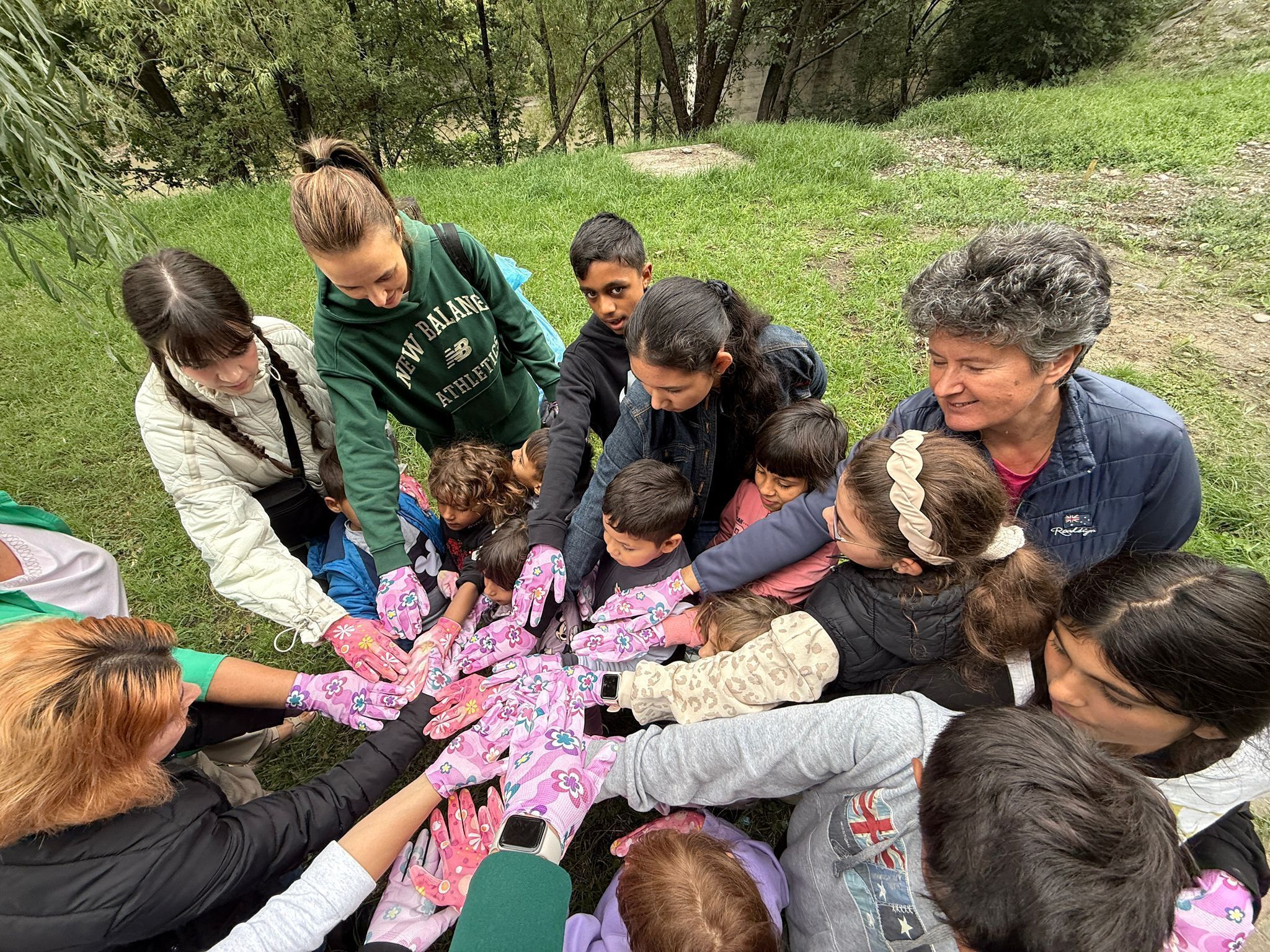
For students, the pergola creates an opportunity for experiential learning. Environmental topics can be explored through direct observation rather than only through textbooks and classroom discussions.
The structure can also improve well-being and social cohesion by creating a more pleasant space where students, teachers and community members can meet and spend time together.
Importantly, the pilot provides a visible and replicable example of how other schools and public institutions could introduce greenery even in highly built-up urban areas.
The Importance of Local Agents of Change
One of the strongest lessons from the pilot was the importance of committed individuals within local institutions.
The school director responded immediately to the initial proposal and supported the project from the first meeting. This level of responsiveness was decisive in maintaining momentum throughout a process affected by bureaucracy, technical challenges and changing timelines.
Innovation often depends on formal strategies, funding and institutional cooperation. Yet the presence of one motivated person in the right position can determine whether an idea moves forward or remains only on paper.
Such local agents of change are particularly valuable in public institutions, where complex decision-making processes can otherwise slow implementation considerably.
Administrative Innovation Is Part of Urban Innovation
The pilot also demonstrated that navigating administrative barriers is as important as developing the technological or environmental solution itself.
A strong concept can be delayed or stopped entirely by missing documentation, unclear ownership, inappropriate permits or a single absent approval.
By adapting the project from a wall-mounted vertical garden to a self-standing pergola, the pilot team developed practical knowledge that can support similar initiatives in the future.
Every regulatory barrier encountered during the project is likely to affect other organisations attempting to green older public buildings in Bucharest. The pilot therefore generated value not only through the final structure, but also through a clearer understanding of how such barriers can be addressed.
A Practical Blueprint for Greener Cities
The Bucharest pilot shows that agile piloting is not about defending the original idea at all costs. It is about protecting the purpose of the innovation while remaining flexible about the form it ultimately takes.
The final green pergola differs from the vertical garden initially imagined, yet it responds more effectively to local administrative, technical and environmental conditions.
By combining urban greening, education and community participation, the project offers a practical blueprint for other cities seeking affordable ways to respond to extreme heat and limited green space.
Sometimes innovation grows exactly as planned. At other times, like the plants themselves, it must adapt to the conditions around it.

12/07/2026
By Viktor Holy
Share on social media:


Smart

News & Events
Read the most recent updates and explore the upcoming events.

Would you like to receive project updates?
You're already part of our community!
Welcome to our newsletter community!
Subscribe to our newsletter