
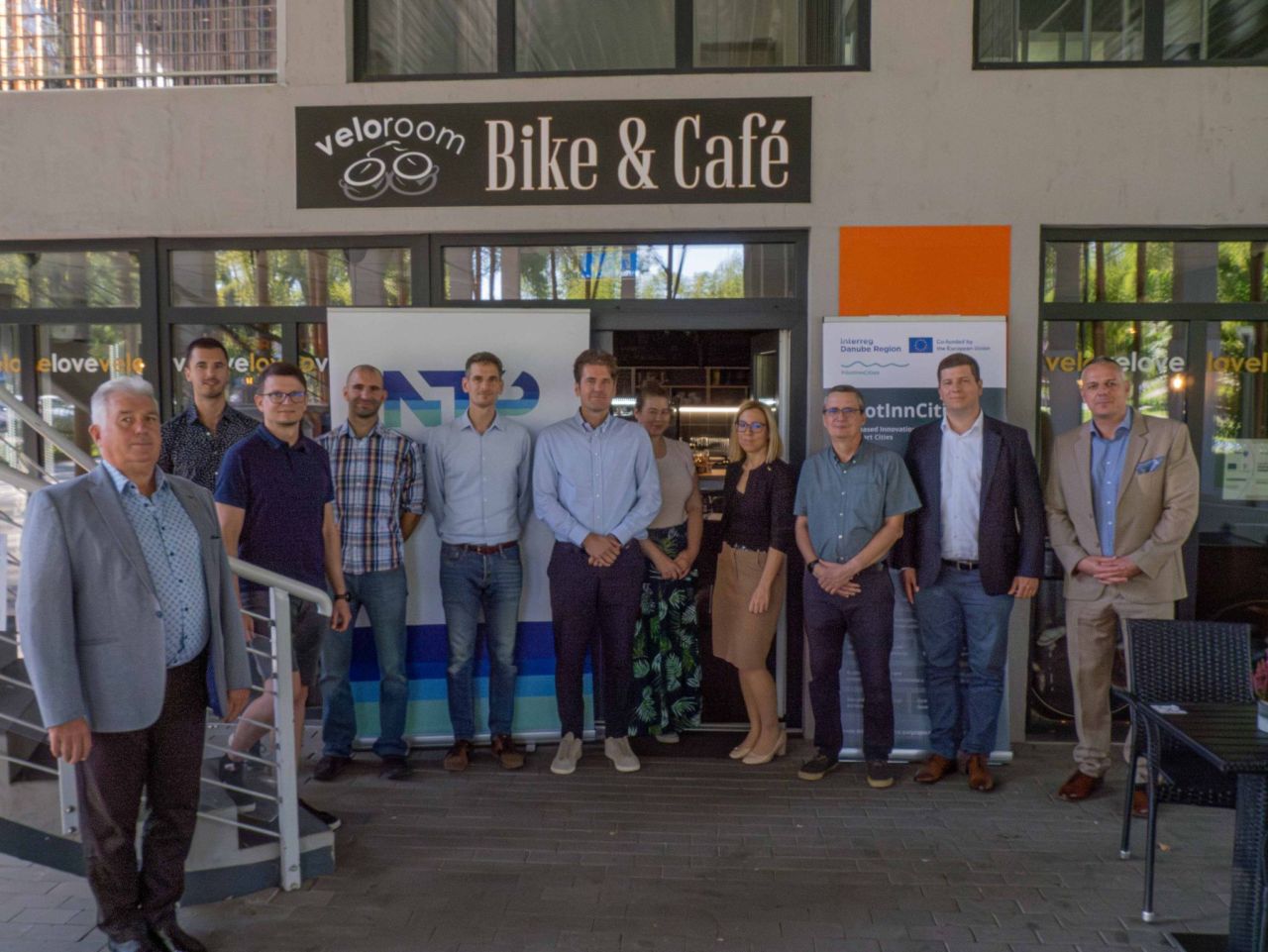

From Abandoned Pavilion to Secure Bicycle Hub in Kecskemét
A lack of secure bicycle parking remains one of the key barriers preventing more people from using bicycles for everyday journeys. Even when residents own a bicycle and are willing to commute sustainably, they may hesitate if there is no safe place to leave it.
This challenge became the focus of an agile pilot implemented by Velorium in Kecskemét, Hungary. The pilot explored how underused urban infrastructure could be transformed into a secure and accessible bicycle storage facility for local residents, students and commuters.
A Better Solution Through Community Participation
The original concept envisaged creating bicycle storage space inside a residential building. However, the participatory planning process brought forward an alternative that responded more effectively to local mobility needs.
Residents suggested converting an abandoned pavilion near Kecskemét railway station into a community bicycle storage hub.
The new location offers clear advantages. Positioned next to an important public transport connection, the facility can support people who combine cycling with train travel. Students and commuters will be able to leave their bicycles securely near the station and continue their journeys by public transport.
By connecting cycling infrastructure with the railway network, the pilot contributes to more convenient multimodal mobility and encourages residents to choose sustainable transport options more frequently.
Turning Underused Infrastructure into a Community Asset
The pilot demonstrates that urban innovation does not always require constructing entirely new infrastructure. Cities can often unlock significant value by identifying neglected buildings, unused rooms or abandoned structures and giving them a new purpose.
Transforming the pavilion into bicycle storage creates a practical service while also bringing an underused site back into community life.
The solution therefore addresses two challenges at once: the shortage of secure bicycle parking and the inefficient use of existing urban infrastructure.
Agile Piloting Makes Space for Local Voices
One of the most important lessons from the pilot was the value of flexibility.
Rather than strictly following the original proposal, the agile piloting process allowed the solution to evolve based on feedback from local residents. Their knowledge of the neighbourhood helped identify a location that was more accessible, more visible and better connected to everyday mobility patterns.
This adaptability is essential when testing innovations in real urban environments. Solutions designed without local input may be technically sound but fail to respond to how people actually live, travel and use public space.
By involving communities in the design process, municipalities and innovators can strengthen local ownership and increase the likelihood that the final solution will be accepted and used.
Communities as Co-Designers of Innovation
The Kecskemét pilot highlights a broader principle: communities should not be viewed only as end users of urban innovation.
Residents can contribute practical knowledge, identify overlooked opportunities and help shape solutions that reflect real local needs. Their participation can turn a promising concept into an intervention that is more relevant, inclusive and sustainable.
The Velorium pilot shows how secure bicycle parking, community participation and the creative reuse of urban infrastructure can come together to support greener mobility.
It also raises an important question for other cities across the Danube Region: could an abandoned pavilion, an unused municipal room or another neglected structure be transformed into a secure bicycle parking facility?

10/07/2026
By Viktor Holy
Share on social media:


Smart

News & Events
Read the most recent updates and explore the upcoming events.


Would you like to receive project updates?
You're already part of our community!
Welcome to our newsletter community!
Subscribe to our newsletter