
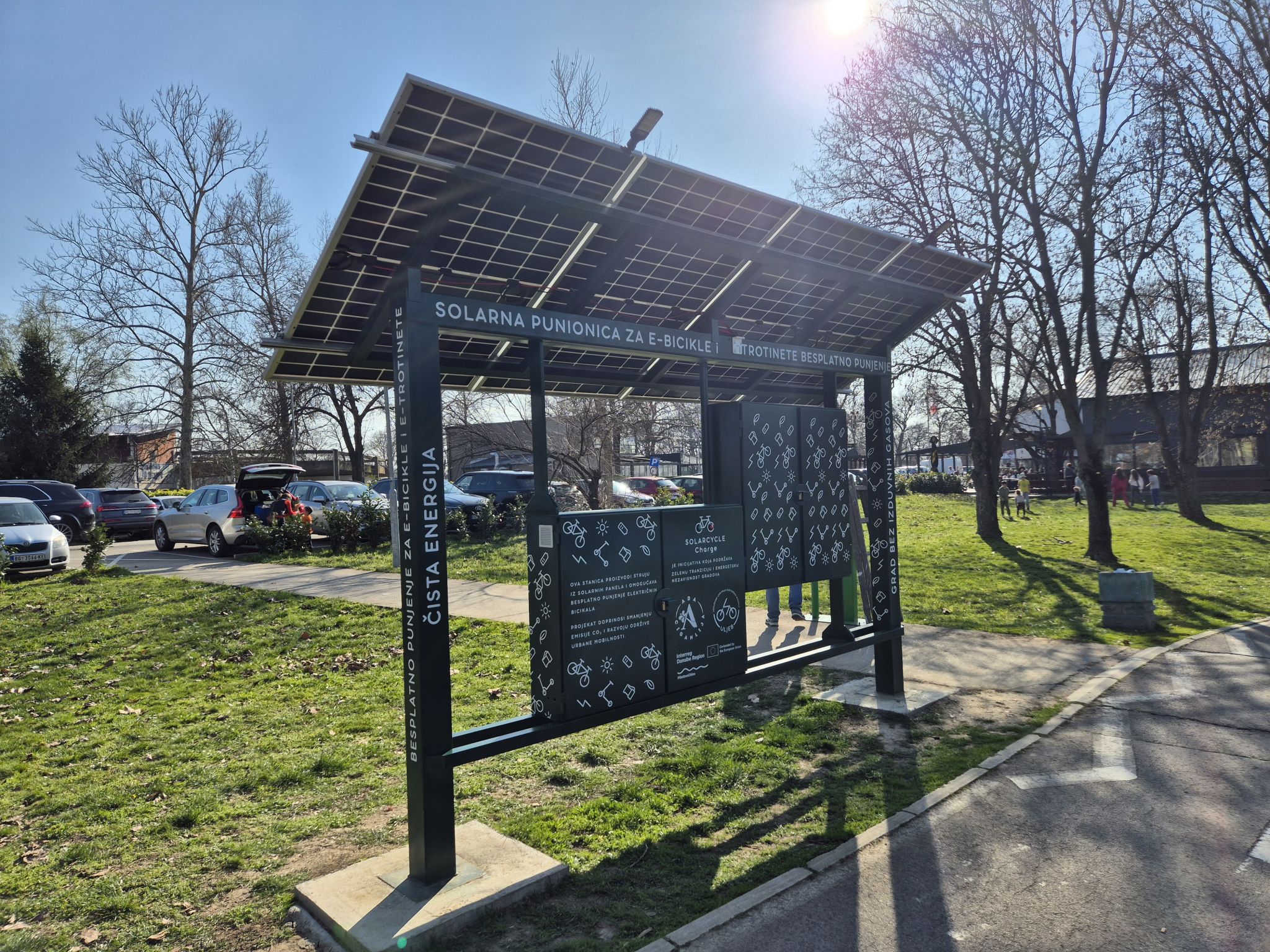

Solar-Powered Charging for E-Bikes and E-Scooters Tested in Belgrade
As cities across Europe look for cleaner, healthier and more flexible mobility options, micro-mobility is becoming an increasingly important part of the urban transport mix. E-bikes and e-scooters can help reduce car dependency, support active lifestyles and make short-distance travel more sustainable.
However, one practical question often remains unanswered: where can riders charge their vehicles easily, safely and sustainably?
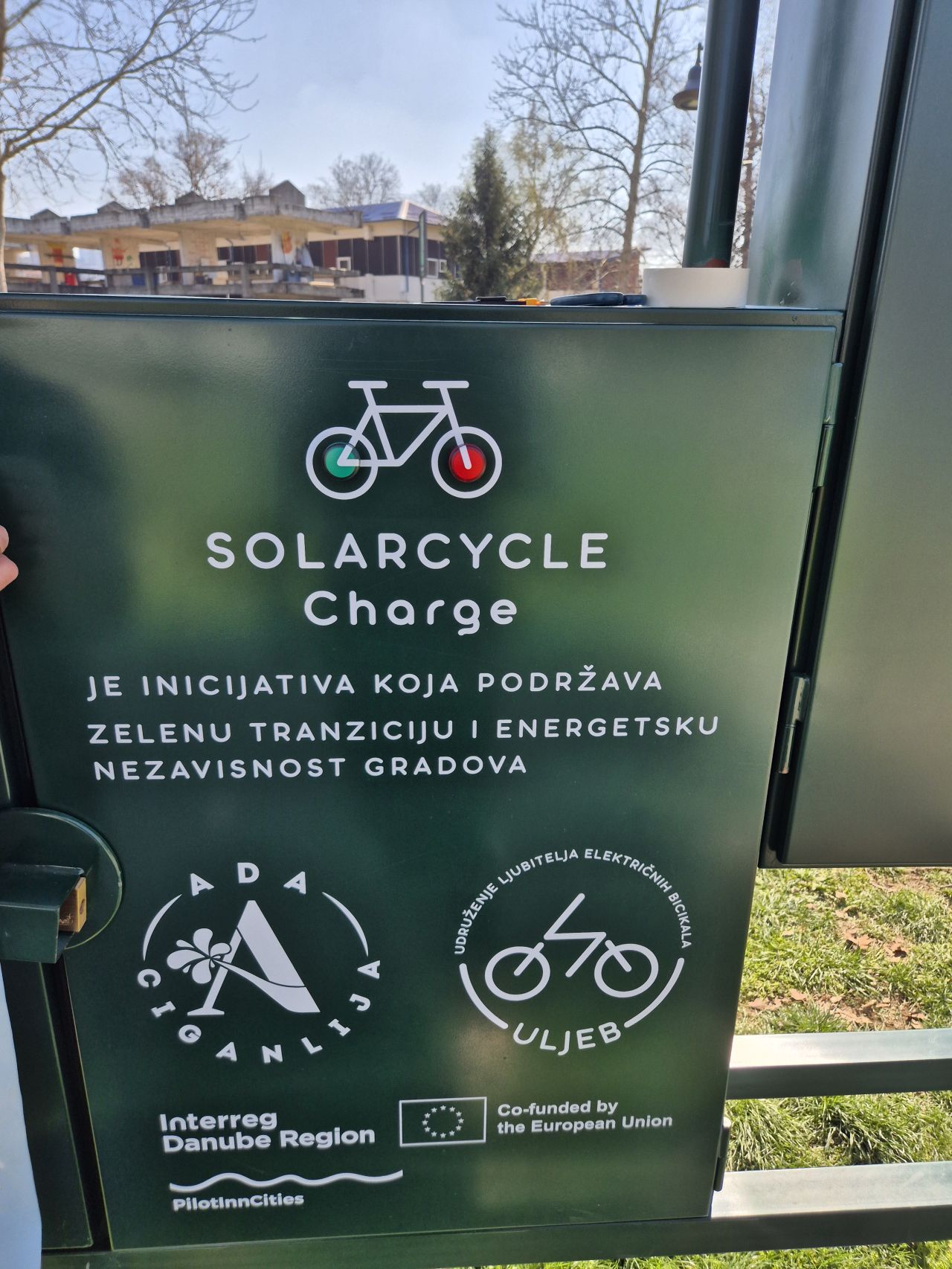
This is the challenge addressed by the PilotInnCities agile pilot implemented in Belgrade, Serbia. Led by the Association of Electric Bicycle Lovers (ULJEB), with the support of the Digital Serbia Initiative, the pilot introduced SolarCycle Charge – the first solar-powered charging station for e-bikes and e-scooters in Serbia.
The charging station was installed at Ada Ciganlija, one of Belgrade’s most popular recreational and cycling areas. The location provides ideal conditions for testing the solution in a real urban environment, where leisure, cycling, commuting and public space use naturally meet.
A Simple Solution with Strong Urban Potential
SolarCycle Charge provides off-grid charging powered by solar panels. This makes the solution fully carbon-neutral and easy to deploy in locations where standard charging infrastructure may be difficult, costly or slow to introduce.
The pilot also tested an innovative financing element. An integrated advertising screen can generate revenue, helping municipalities reduce or potentially cover the costs of purchasing and maintaining the station. This makes the model particularly interesting for cities looking for sustainable infrastructure that does not rely entirely on public budgets.
The solution is designed to be easily scalable. Suitable locations may include parks, promenades, recreational zones, city centres, cycling routes or other public spaces where e-bike and e-scooter users naturally gather.
More Than Infrastructure
The pilot is not only about installing a charging station. ULJEB also works to promote e-bikes as a sustainable, healthy and accessible form of urban mobility. Through education, awareness-raising and cooperation with public and private partners, the organisation supports a wider shift in transport habits.
This is an important part of agile piloting. A technological solution can only create real impact if users understand it, accept it and see its value in everyday life. By combining infrastructure with citizen engagement, the Belgrade pilot shows how municipalities can encourage more sustainable mobility choices in a practical and visible way.
Why It Matters for Municipalities
For cities and towns, SolarCycle Charge offers several potential benefits:
carbon-neutral charging infrastructure for micro-mobility users,
easy deployment without dependence on the electricity grid,
support for cycling and sustainable urban transport,
a possible self-financing model through advertising,
improved public services in recreational and high-traffic areas,
a scalable solution that can be adapted to different urban contexts.
The Belgrade pilot demonstrates how a relatively compact piece of infrastructure can address several municipal priorities at once: climate neutrality, public space activation, sustainable mobility and citizen services.
Through PilotInnCities, the solution is being tested in real conditions, helping both the municipality and the solution provider better understand user behaviour, operational requirements and future scaling opportunities.
Solar-powered charging may not solve all urban mobility challenges on its own. But as part of a broader ecosystem of sustainable transport measures, it can become a practical and visible step towards cleaner, more accessible and more resilient cities.

21/06/2026
By Viktor Holy
Share on social media:


Smart

News & Events
Read the most recent updates and explore the upcoming events.

Would you like to receive project updates?
You're already part of our community!
Welcome to our newsletter community!
Subscribe to our newsletter