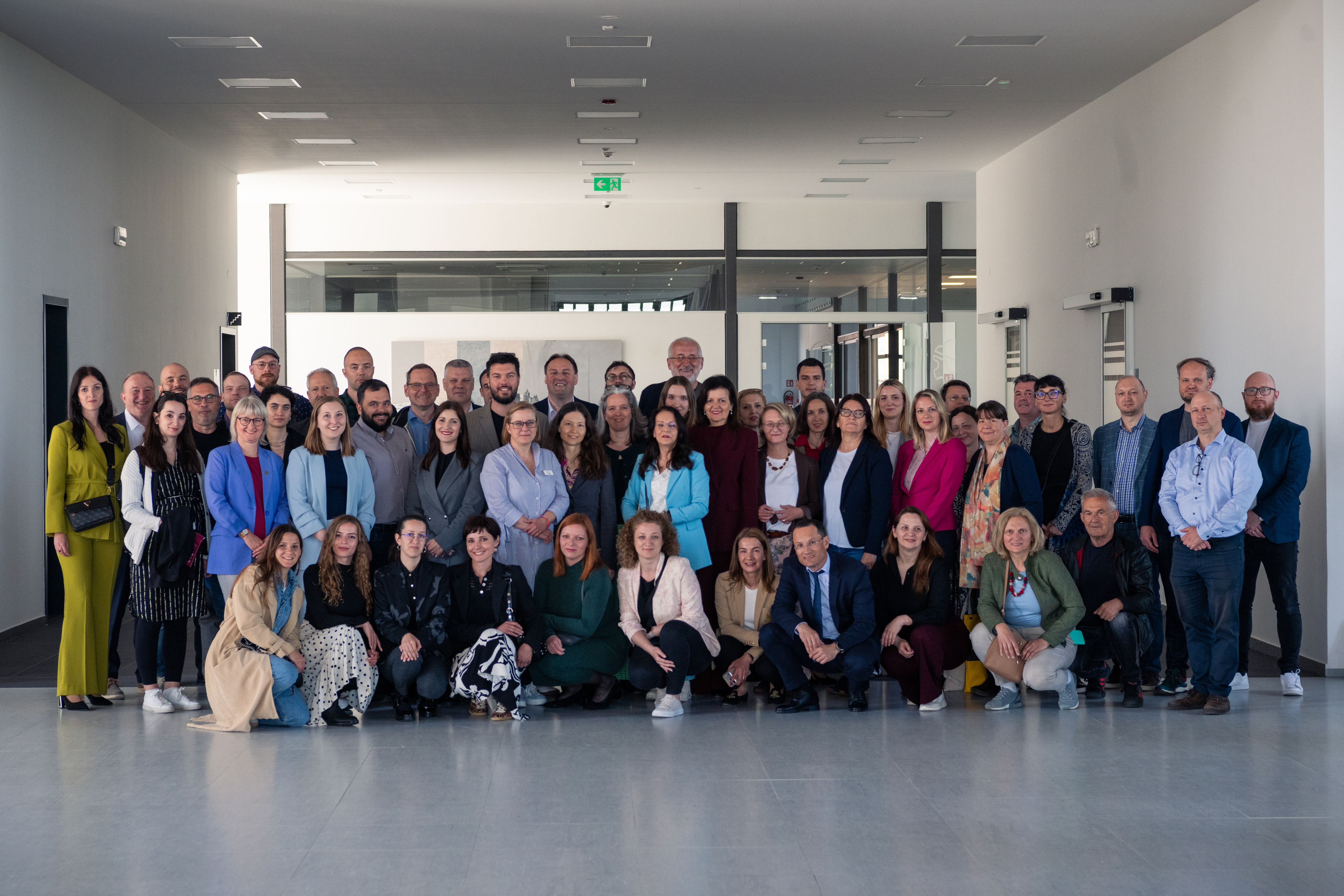

DECIDE Final Conference "Turning Circular Ideas into Successful Business Models – Experiences from the Danube Region"
On 13th May 2026 Technology Innovation Centre Međimurje (TICM), the University of Zagreb Faculty of Organization and Informatics (FOI), and the Social cooperative Humana Nova hosted the final conference of the international project DECIDE “Digital Services for Circular Economy – a Toolbox for Regional Developers & SMEs” in Čakovec, Croatia. The international conference was organized by Centre for Digitalisation – ZD.BB GmbH, Technology Innovation Centre Međimurje (TICM) and the EUSDR Working Group on Circular Economy and Bioeconomy in cooperation with EUSDR Priority Area 8 – Competitiveness of Enterprises. Under the motto “Turning Circular Ideas into Successful Business Models – Experiences from the Danube Region” the event brought together over 90 experts, institutional representatives, entrepreneurs, and development organisations from the Danube Region.
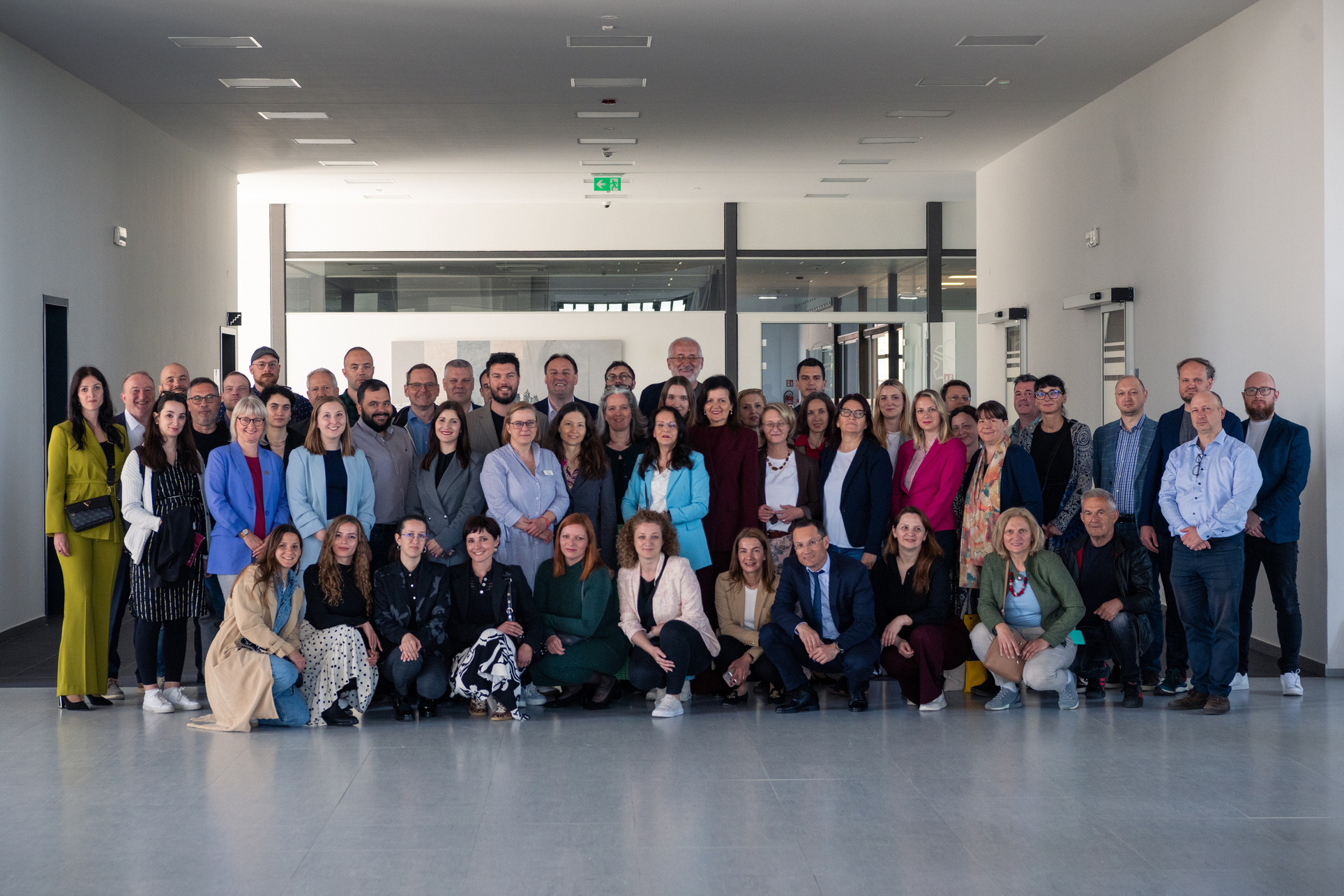
Group photo from the DECIDE final conference. Copyright: TICM
The joint conference of the Interreg DRP project DECIDE “Digital Services for Circular Economy – a Toolbox for Regional Developers & SMEs” and the EUSDR Working Group on Circular Economy and Bioeconomy provided a platform for strengthening synergies in the fields of circular economy and bioeconomy.
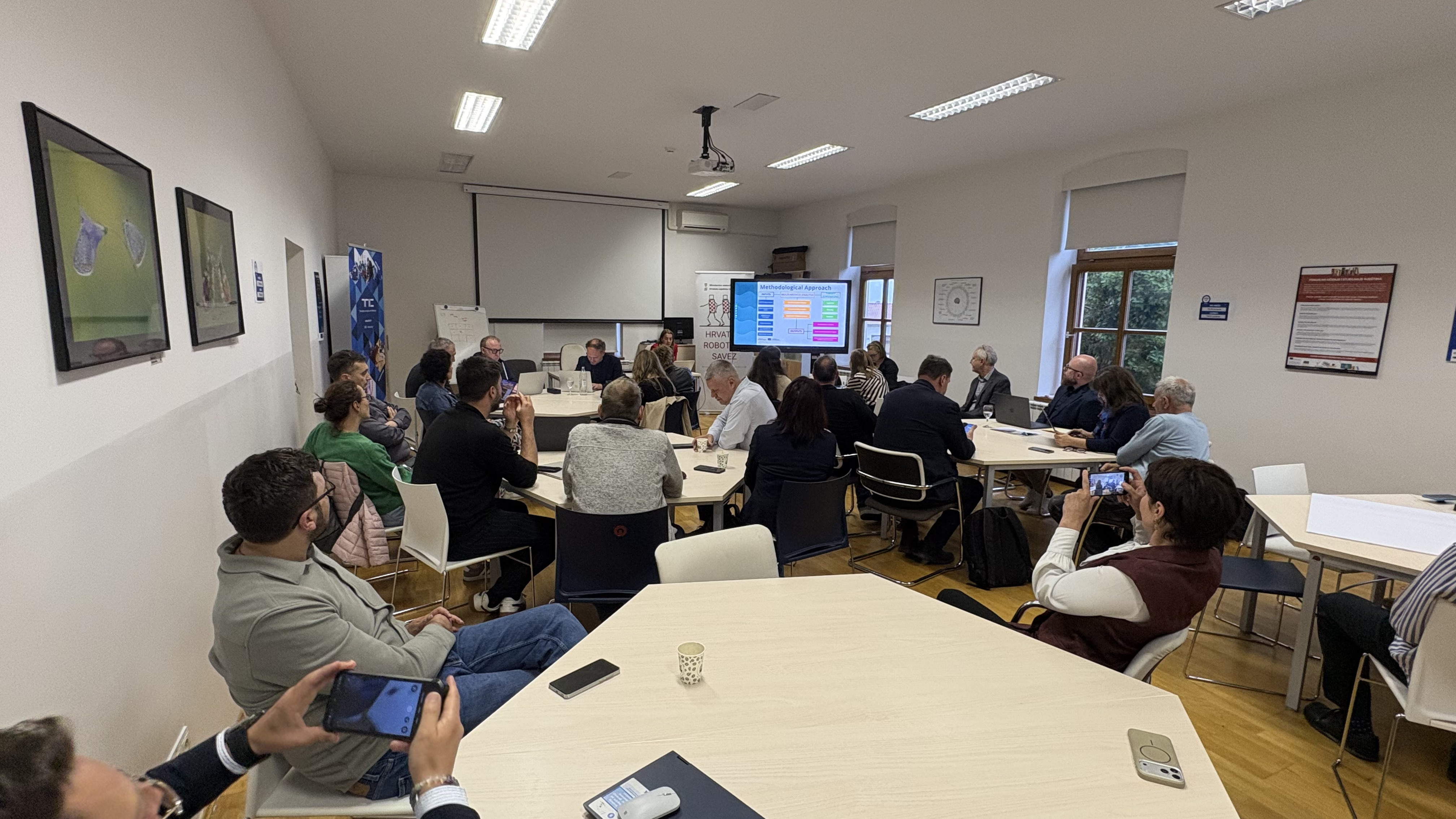
The hybrid event gathered more than 70 participants onsite and around 20 participants online, including participants and contributors from the Interreg Danube Region Programme projects Tex-Dan and Green-Tex, the Interreg DRP National Contact Point Germany, EUSDR Priority Area 8, the Danube Youth Council (DYC) and the PA 8 Working Group Digital Danube. The event provided an opportunity for exchange and networking across projects, organisations and stakeholder groups from across the Danube Region.
Participants discussed challenges and opportunities related to the circular economy and the digital and green transition, while sharing experiences, lessons learned and examples of good practice.
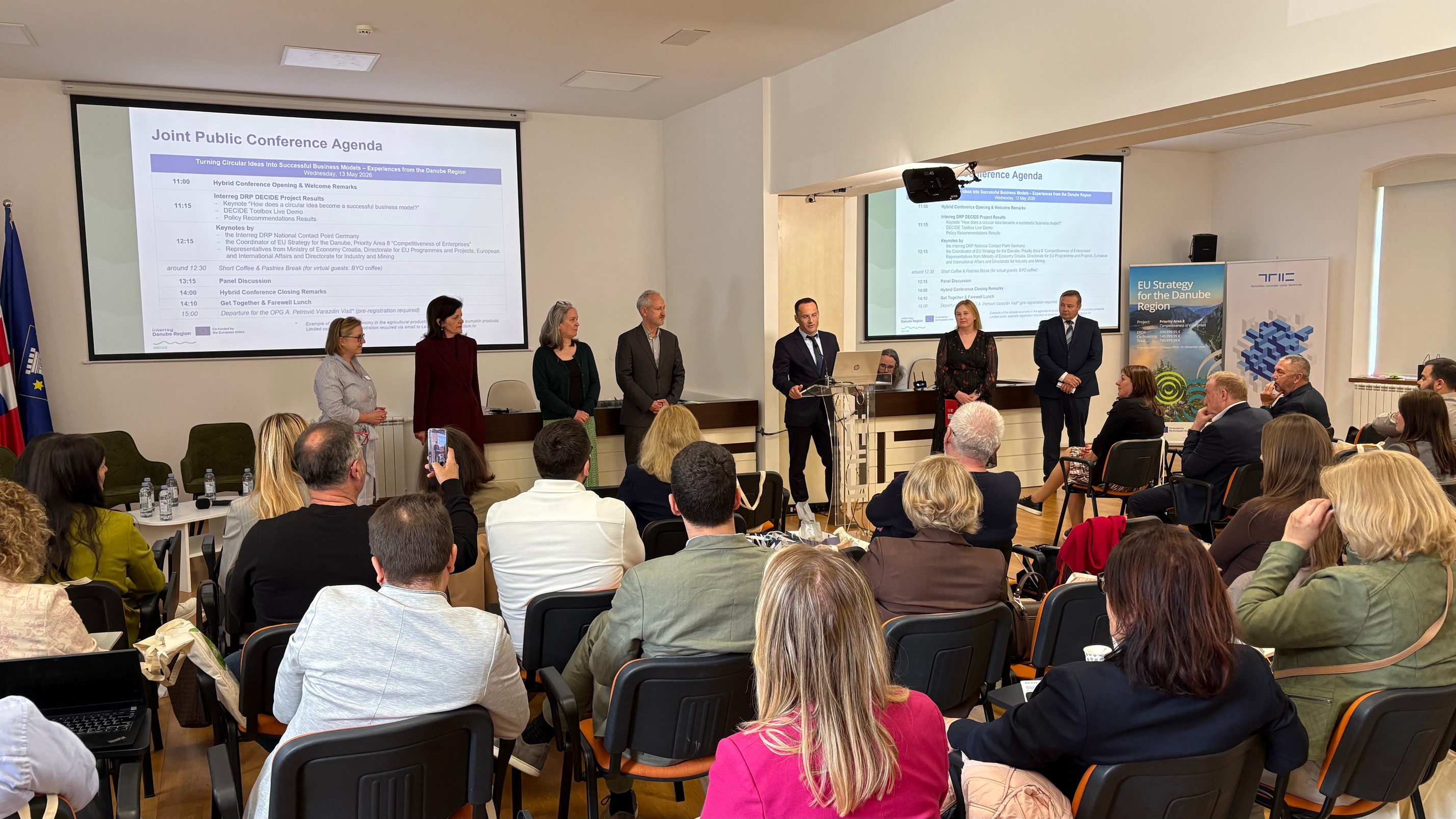
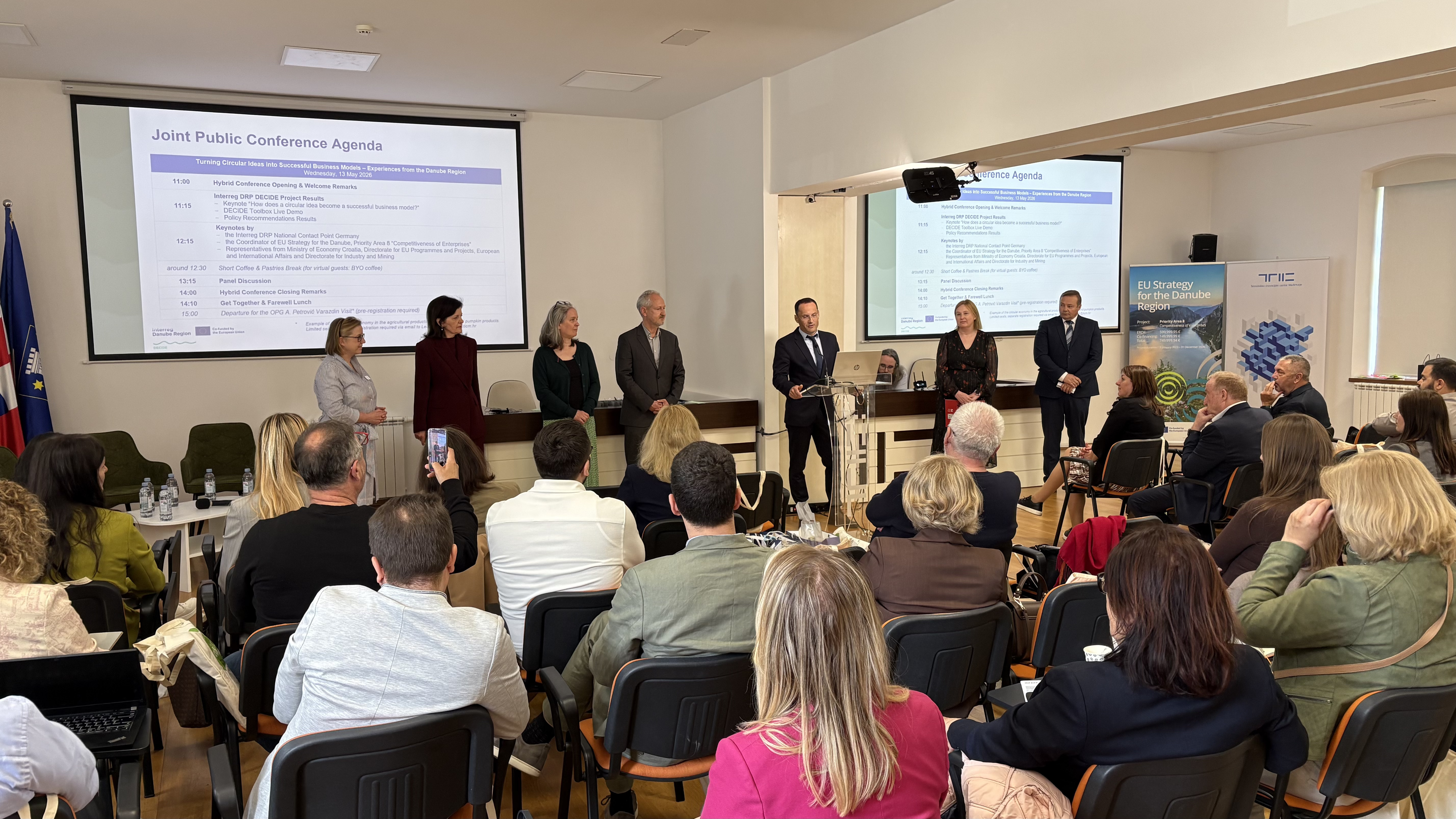
Welcome speeches as an introduction to the final conference. Copyright: TICM
The conference was opened by Ivan Plačko, Technology Innovation Centre Međimurje (TICM), on behalf of the three local host organisations. Welcome addresses were also delivered by Dr. Claus Hoffmann on behalf of the DECIDE Lead Partner, Centre for Digitalisation Böblingen District - ZD.BB GmbH, Karmen Maričić from the Ministry of Economy Croatia and Co-Coordinator of EUSDR Priority Area 8 “Competitiveness of Enterprises”, and Grit Ackermann, Co-Coordinator of the EUSDR Working Group Circular Economy and Bioeconomy. The opening session was further enriched by contributions from Prof. Marina Klačmer Čalopa, Dean of the Faculty of Organization and Informatics (FOI), and Mario Medved, Deputy County Prefect of Međimurje County.
The conference programme featured presentations of DECIDE project results, demonstrations of the developed digital tools and policy recommendations, as well as keynote lectures by international experts and project partners on successful circular business models and the capitalisation of circular solutions in the Danube Region. The DECIDE project brings together 16 partners from ten countries of the Danube Region and develops practical tools and methodologies that support companies, start-ups and development organisations in assessing their potential for circular transformation and implementing sustainable and innovative business models.
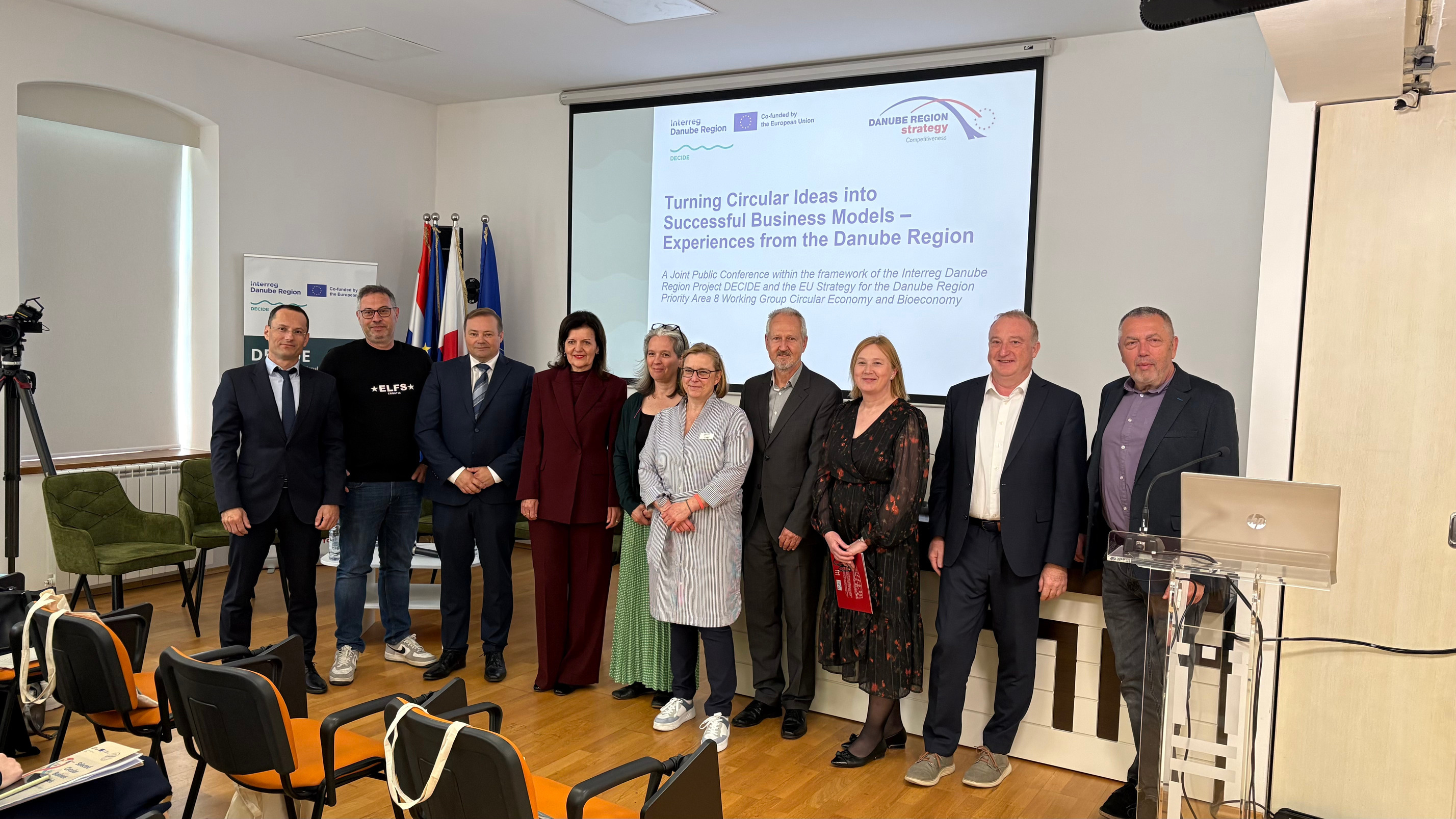
Group photo of the conference welcome speakers, from left to right: Ivan Plačko, Director of TICM; Ivan Božić, Director of the Social cooperative Humana Nova; Mario Medved, Deputy County Prefect of Međimurje County; Karmen Maričić, Croatian Ministry of Economy (Coordinator of EUSDR PA8); Grit Ackermann, moderator and coordinator of the EUSDR Working Group on Circular Economy and Bioeconomy; Severine Dommer, DECIDE Project Lead; Dr. Claus Hoffmann, CEO of the lead partner organisation ZD.BB GmbH; Prof. Marina Klačmer Čalopa, Dean of FOI; Prof. Dieter Hertweck, Herman Hollerith Centre, Reutlingen University; and Prof. Emeritus Vjeran Strahonja (FOI). Copyright: TICM
Prof. Dr. Dieter Hertweck from the Herman Hollerith Centre at Reutlingen University spoke about how to transform circular ideas into successful business models, while Jan Fauser demonstrated the tools and methods of the developed and implemented DECIDE Toolbox. Paula Pop-Nistor from the George Emil Palade University of Medicine, Pharmacy, Science and Technology in T“rgu Mureș presented the results of the policy recommendations developed for decision-makers, while Mirjam Zillober, National Contact Point for the Interreg Danube Region Programme in Germany, spoke about the capitalisation of circular solutions emerging from projects in the Danube Region.
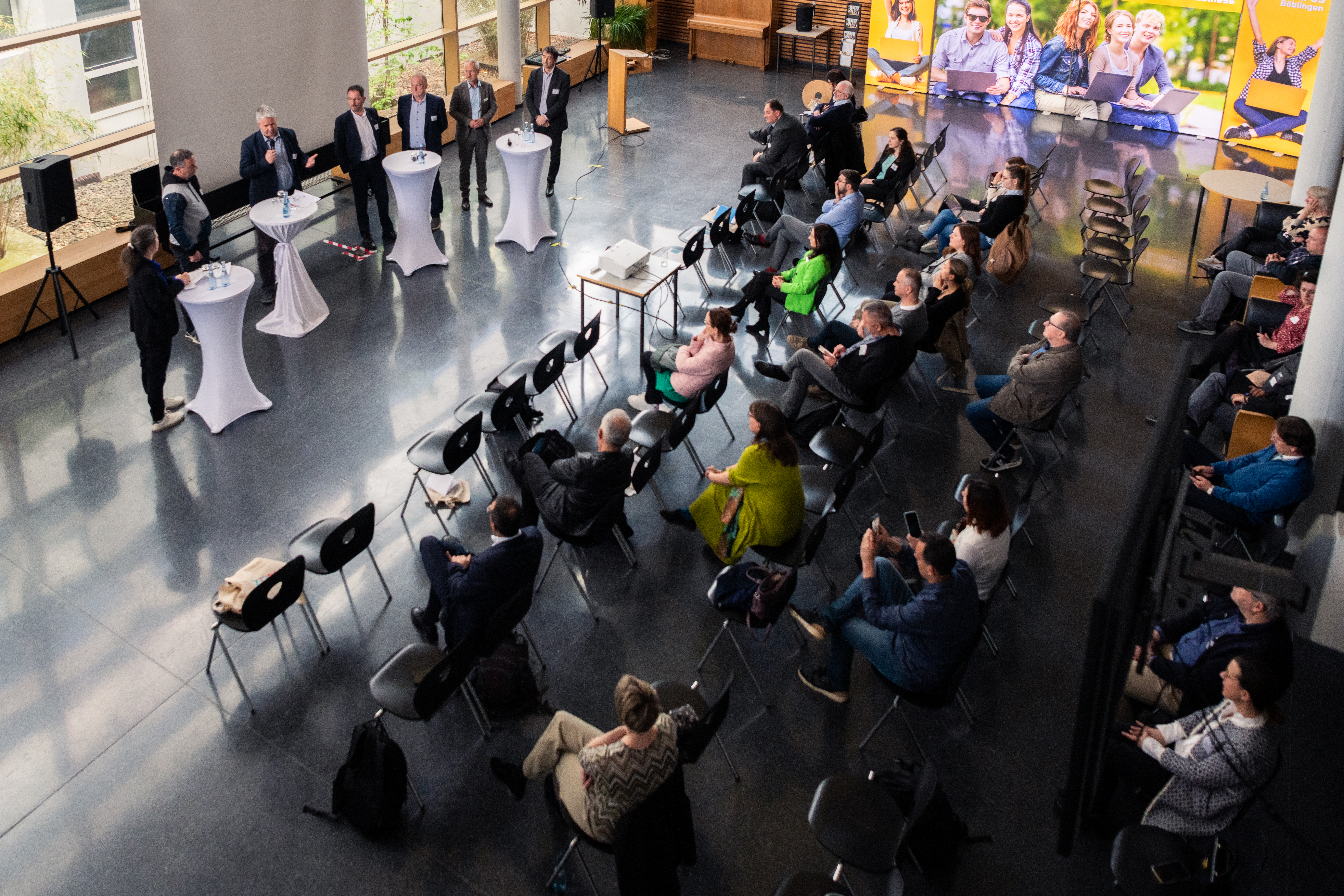
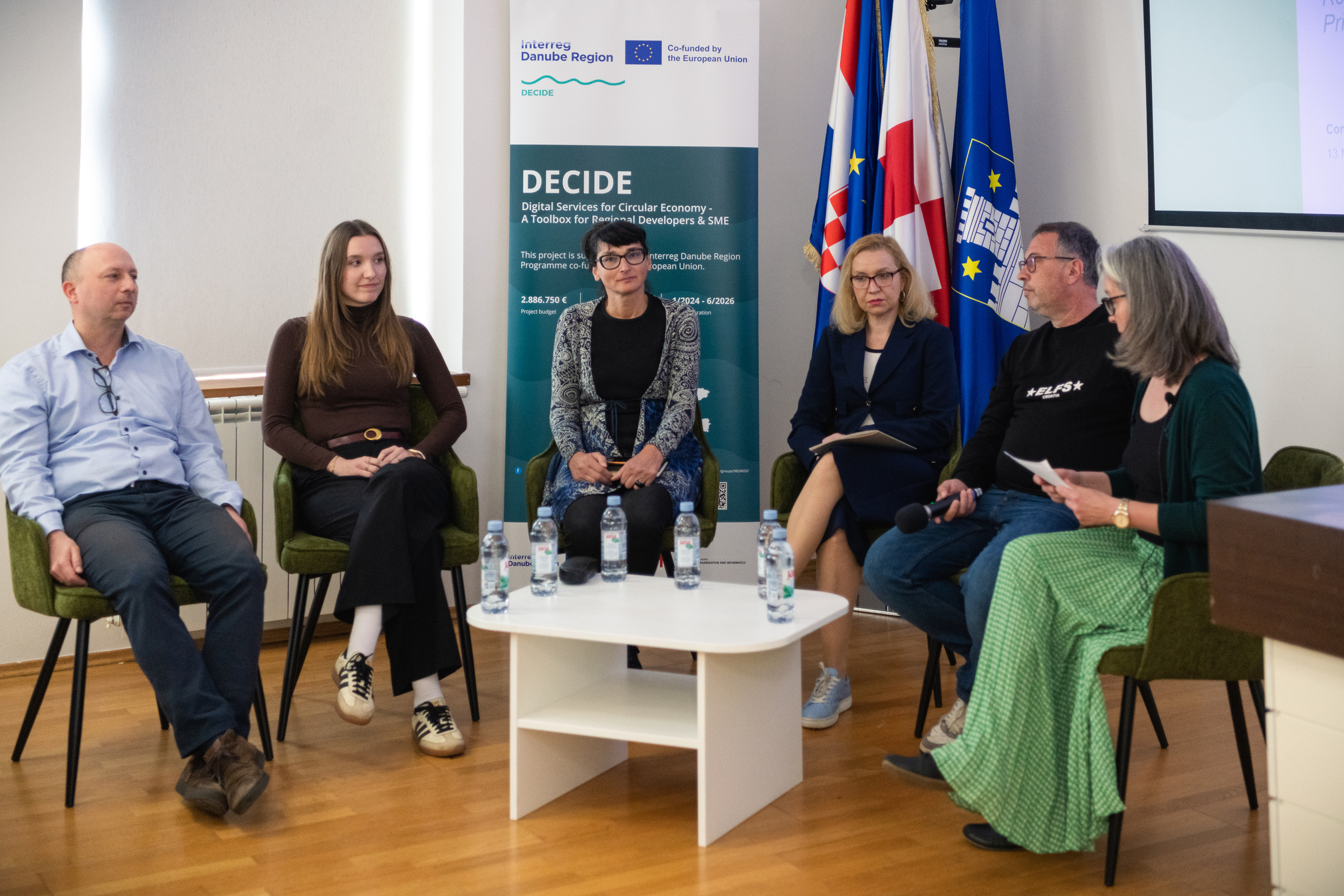
One of the key moments of the conference was the panel discussion dedicated to practical experiences, featuring representatives of organisations and institutions from Croatia, Slovenia, Bosnia and Herzegovina, and Hungary. The panel was moderated by Grit Ackermann, while examples of good practice and experiences were shared by Ivan Božić, Director of the Social cooperative Humana Nova, Amela Ikić Suljagić from the Sarajevo Regional Development Agency, Nikolina Babić from the Chamber of Commerce and Industry of Slovenia, Majda Potokar from Technology Park Ljubljana, and Bendo Zoltan from the South Transdanubian Regional Innovation Agency.
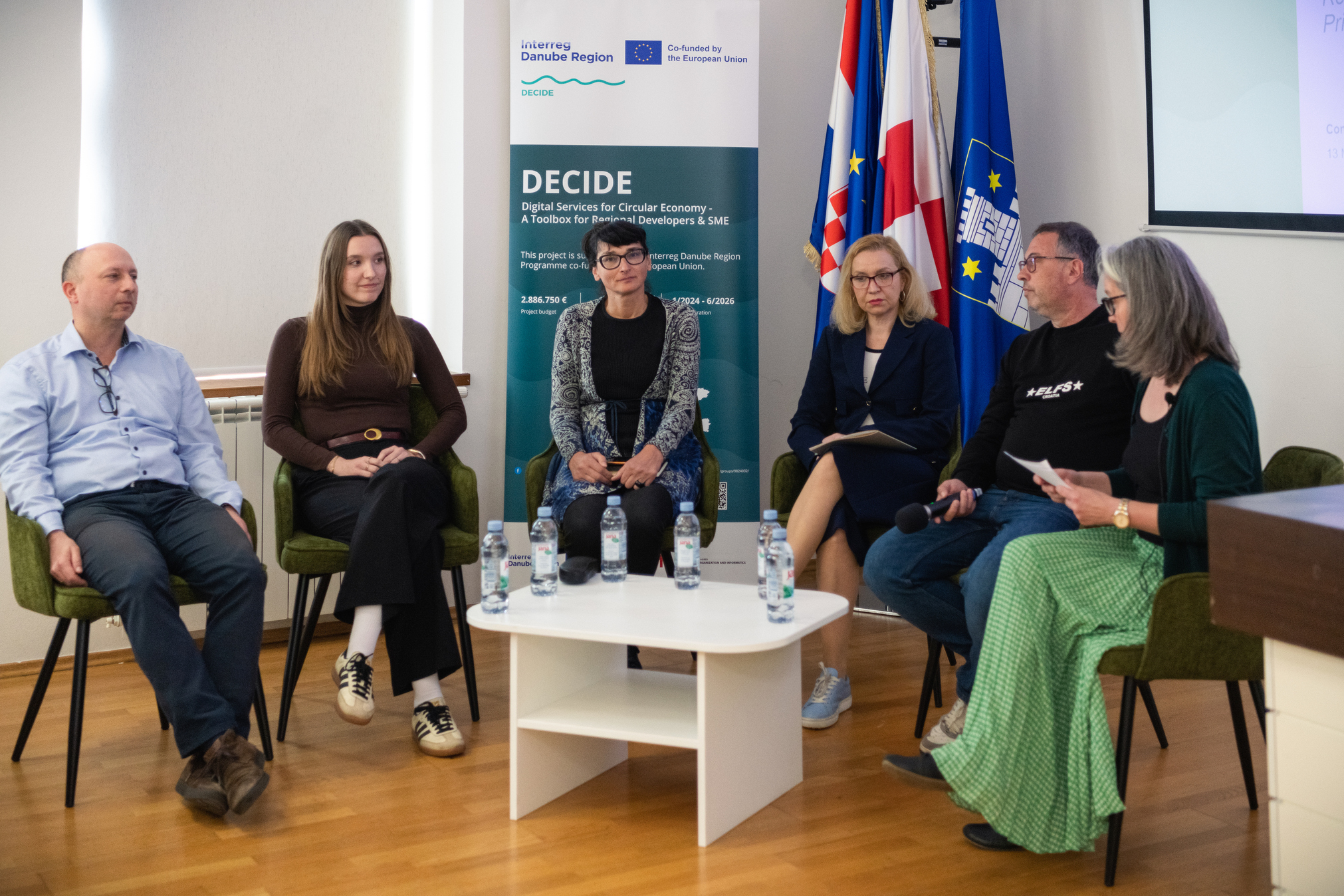
Engaging panel discussion dedicated to practical experiences. Copyright: TICM
Alongside the conference programme, participants visited examples of good practice during their stay. Visits were organised to the Social cooperative Humana Nova, an example of a social enterprise with a circular model that reduces textile waste and creates social impact, as well as to OPG Petrović in Varaždin, an example of circular economy in agricultural pumpkin production and pumpkin-based products.
The joint conference successfully brought together project partners, policymakers, development organisations, entrepreneurs, and experts from across the Danube Region, enabling them to exchange knowledge, strengthen international cooperation, and promote innovative circular economy solutions that can contribute to a more sustainable and competitive future.
This article has been developed within the framework of the project DECIDE “Digital Services for Circular Economy – A Toolbox for Regional Developers & SMEs”, co-financed by the Interreg Danube Region Programme under the 2021–2027 financial period. The content reflects the views of the authors and does not necessarily represent the official position of the DECIDE project, its partners, or the programme authorities.

29/05/2026
By Lea Trojnar Mustak
Share on social media:


Smart

News & Events
Read the most recent updates and explore the upcoming events.


Would you like to receive project updates?
You're already part of our community!
Welcome to our newsletter community!
Subscribe to our newsletter